Across distributed substation networks, routine battery maintenance can create a significant operational burden. In this article John Kim, Director at from EnerSys discusses how battery technology, monitoring and lifecycle planning can help reduce unnecessary site visits while supporting reliability, serviceability and long-term asset performance.
A substation battery is rarely the asset that attracts attention. When it performs, it attracts little attention. When it fails, the consequences can be immediate. That is why utilities have always taken a conservative view of backup power. The system must support critical DC loads, protection and control equipment, circuit breaker tripping, communications, SCADA infrastructure, and other essential substation functions. There is little room for uncertainty. So, the specification process is rightly detailed. Autonomy, capacity, voltage, battery chemistry, charger compatibility, footprint, ventilation, room layout, safety requirements and compliance obligations all need to be addressed before a substation battery backup system is approved. Yet one question often receives far less attention during specification.
What maintenance model is this decision creating?
For many utilities, the answer only becomes clear after the system has entered service. It appears in planned site visits, unscheduled battery maintenance, access arrangements, safety procedures, inspections, testing and return journeys. In this context, a truck roll is not simply a technician arriving at a site. It is the full chain of planning, travel, access, safety, inspection, testing, documentation, and follow-up that surrounds the visit. None of these activities are unusual. Most are routine. That is part of the problem. The truck roll burden rarely announces itself as a single major failure in planning. More often, it accumulates quietly. One visit. One inspection. One set of readings. One return journey. Manageable at a single site, but significant when repeated across a distributed network.
The issue is not the battery alone. It is the maintenance model that develops around it. A battery system can meet the electrical requirements, fit the available space and satisfy the standard, while still creating a maintenance profile that becomes difficult to support at scale. For utilities reviewing substation DC backup power, the question is no longer only whether the system meets the technical specification. It is whether the maintenance model remains practical for the next decade or more.
MAINTENANCE INTENSITY
MAINTENANCE INTENSITY IS THE TOTAL OPERATIONAL EFFORT REQUIRED TO KEEP BACKUP POWER INSPECTED, TESTED, DOCUMENTED AND READY ACROSS ITS SERVICE LIFE.
|
The hidden workload behind a routine visit
For remote, unmanned or access-controlled substations, the effort surrounding a maintenance visit can outweigh the battery task itself. A truck roll involves planning, travel, access, safety procedures, inspection, testing, documentation and follow-up. Each activity may be routine, but across a widely dispersed network the burden can become significant. That is why maintenance intensity matters. It is the total operational effort required to keep backup power inspected, tested, documented and ready across its service life. A watering requirement that seems manageable at one site can become a recurring labour commitment across hundreds of locations, while scheduled testing can place further pressure on already stretched field resources.
practicalities of the installation also affect maintenance time. Rack or cabinet access, inspection space, ventilation, connection access and battery-room layout can all influence how efficiently engineers complete the work. For utilities, the objective is not to reduce maintenance discipline, but to ensure the maintenance model remains practical across the network.
Why like-for-like replacement can lock in the wrong lifecycle
Utilities have good reasons for favouring proven technology. Known equipment, established layouts and familiar maintenance routines can reduce perceived project risk, which makes like-for-like battery replacement an attractive option. But repeating the existing specification can also preserve the same maintenance burden for another decade or more. If a VLA installation requires periodic watering, electrolyte checks, corrosion inspections and repeated site attendance, replacing it with the same technology carries those requirements into the next operating cycle.
That does not make legacy systems inherently unsuitable. VLA, VRLA, nickel cadmium and TPPL technologies can all have a role depending on duty, site conditions, autonomy requirements and maintenance strategy. The point is that maintenance should be considered alongside capacity, safety and cost before the specification is fixed. By the time a project reaches procurement, chemistry, charger compatibility, physical layout and maintenance expectations may already be assumed. Asking earlier how frequently technicians will need to attend, how difficult the site is to access and what the system will require over its service life can help utilities avoid locking themselves into an unnecessarily resource-intensive operating model.
SPECIFICATION PERSPECTIVE
LIKE-FOR-LIKE REPLACEMENT CAN REDUCE SHORT-TERM DECISION COMPLEXITY. IT CAN ALSO EXTEND THE SAME MAINTENANCE MODEL FOR ANOTHER DECADE.
|
Where lower-maintenance technologies can change the equation
Once maintenance requirements are considered alongside technical performance, battery technologies can be assessed in a more useful way. Valve Regulated Lead Acid (VRLA) batteries can reduce some routine maintenance activities associated with flooded systems, particularly watering and electrolyte checks, while still requiring appropriate inspection, testing and maintenance records. Where field access is difficult or maintenance resources are limited, reducing routine intervention can make a meaningful difference over the life of the installation.
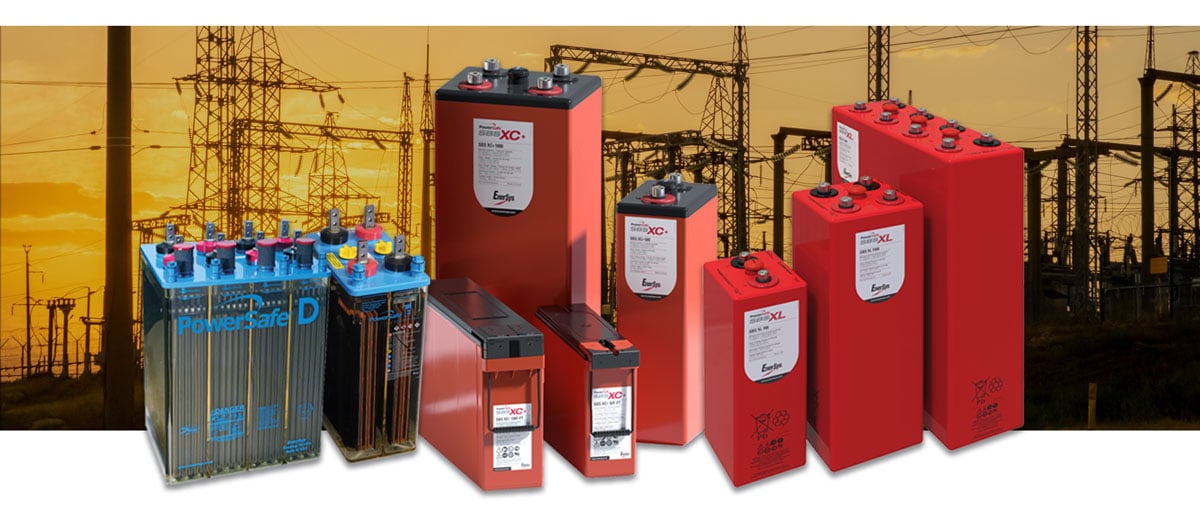
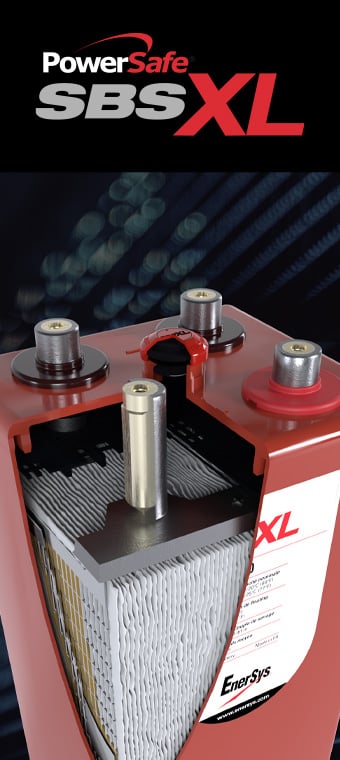
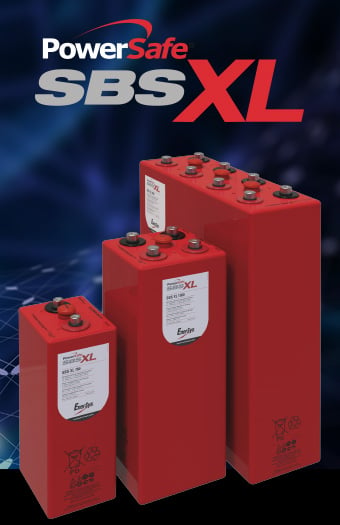
Thin Plate Pure Lead (TPPL) technology extends that discussion. Its pure lead plate construction is designed to provide strong corrosion resistance, stable standby performance and long service life in demanding stationary applications. PowerSafe® SBS XL batteries support this type of lower-intervention approach, combining compact design and high energy density with no requirement for watering during normal operation. Lower float current compared with low-antimony lead selenium batteries may also reduce energy use and standby losses where site conditions allow.
Service life is another important part of the lifecycle equation. EnerSys references PowerSafe® SBS XL batteries as offering up to 20 years of service life under recommended operating conditions, which can help reduce replacement frequency and associated waste. Storage before installation can also affect maintenance effort. Some battery technologies require periodic boost charging while held in distribution centres, whereas TPPL batteries can offer a shelf life of 18 months to two years when stored correctly, helping to simplify inventory planning.
LIFECYCLE PERSPECTIVE
A LOWER-MAINTENANCE SUBSTATION BATTERY BACKUP SYSTEM DOES NOT JUST CHANGE WHAT HAPPENS INSIDE THE BATTERY ROOM. IT CAN CHANGE THE OPERATING MODEL AROUND IT.
|
How grid material can influence long-term maintenance
Grid material also matters. TPPL technology uses thin pure lead grids, which can offer improved corrosion resistance compared with conventional lead-calcium grids. In appropriate applications, that can support longer-term standby performance and help reduce maintenance burden. However, grid material is only one part of the specification decision. Duty, temperature, charger compatibility, site access, maintenance practice and lifecycle strategy all need to be considered when selecting a battery system for utility backup power.
The impact of lower routine maintenance becomes clearer when viewed across an entire substation network. EnerSys modelling indicates that a utility operating a large fleet of remote substations could reduce site visits by up to 80% by replacing traditional Vented Lead-Acid systems with TPPL-based PowerSafe® SBS XL batteries. This is not a universal outcome and actual results will vary according to operating conditions, maintenance practices and system configuration.
The wider value lies in what fewer routine visits make possible: less travel, fewer access arrangements, reduced pressure on skilled maintenance teams and more time for higher-priority work. The key question is therefore not whether every site could achieve the same reduction, but which substations would benefit most from a lower-maintenance approach. Remote, difficult-to-access or high-intervention sites are the obvious places to review first.
Smart battery visibility can make maintenance more targeted
Lower-maintenance technology can reduce routine intervention, while monitoring helps ensure remaining maintenance activity is directed where it is most needed. Battery monitoring systems can provide additional information about battery condition across remote or operationally critical substations, helping teams identify where closer investigation may be required.
Monitoring should not replace inspection, testing, maintenance records or corrective action. Its value lies in improving the quality of maintenance decisions. By reviewing data such as voltage, temperature, charge and discharge activity, warnings and alerts, engineers can identify where battery condition is changing and where field resource should be prioritised.
For critical grid infrastructure, better visibility can support a more targeted approach to site visits, testing and replacement planning. The objective is not simply less maintenance, but better-informed maintenance based on clearer evidence of battery condition between scheduled inspections.
VISIBILITY PERSPECTIVE
MONITORING DOES NOT REMOVE THE NEED FOR MAINTENANCE. IT HELPS UTILITIES UNDERSTAND WHERE MAINTENANCE EFFORT SHOULD BE FOCUSED.
|
A practical lifecycle review framework
The truck roll problem is not solved by technology alone. It begins with changing how backup power systems are evaluated. For utilities reviewing substation backup systems, the starting point should be a more complete understanding of the installed base. Which sites are generating the most routine maintenance? Which battery systems are the most resource-intensive? Which locations are difficult to access? Where do testing records, battery condition or end-of-life indicators suggest that the current maintenance approach should be reviewed?
A practical review should consider six areas:
|
1. SITE ACCESS
Remote, unmanned or operationally difficult sites should be reviewed differently from locations with straightforward access. The more difficult a site is to reach, the more important it becomes to question whether routine intervention is justified.
|
2. MAINTENANCE FREQUENCY
Some battery systems create a steady pattern of attendance for watering, inspection, testing or corrective action. The task may be simple, but the repeated visit may not be.
|
|
3. BATTERY CONDITION
Battery banks or strings approaching end of life should be assessed not only for replacement timing, but for the lifecycle model that follows. Signs of capacity fade, sulfation, corrosion, thermal stress or declining performance can all influence the priority and type of intervention.
|
4. TESTING AND RECORDS
Battery capacity testing, load bank testing, internal resistance testing (DC), impedance testing (AC) and maintenance logging all have an operational cost. Documentation should be treated as part of the maintenance model, not an administrative afterthought.
|
|
5. TECHNOLOGY FIT
VRLA, TPPL, NiCd and VLA battery technologies all need to be considered in relation to site conditions, duty cycle, autonomy requirements, space, access and maintenance strategy. The right answer may vary across the substation network.
|
6. MONITORING OPPORTUNITY
Battery monitoring is often most valuable where access is difficult, site criticality is high or battery condition needs closer observation. The aim is not to remove maintenance, but to make it more targeted and better informed.
|
This type of review does not assume that one technology is right for every site. It helps utilities distinguish between sites where the current maintenance model remains appropriate and where a different approach could create greater lifecycle value.
Questions to ask before the next replacement cycle
- Which sites generate the most routine interventions?
- Where do watering, inspection, testing or documentation requirements create the greatest maintenance burden?
- Which substations are remote, access-controlled, space-constrained or difficult to service?
- Where could lower-maintenance technologies reduce routine visits without compromising reliability?
- Where would battery monitoring improve maintenance planning or provide greater confidence in battery condition?
- How should maintenance intensity influence the next specification?
Review the lifecycle, not just the replacement
The truck roll problem starts long before a vehicle leaves the depot. It starts with the assumptions built into specifications, standards, replacement strategies, and maintenance schedules. It starts when like-for-like replacement is treated as the lowest risk option without fully assessing the maintenance model it carries forward. For utilities, the opportunity is to bring maintenance intensity into the specification conversation earlier. Not as an afterthought, and not as a field issue to solve later, but as a core lifecycle criterion.
The right question is no longer only: What battery should we install? It is, what maintenance model are we creating for the next lifecycle?
Utilities reviewing substation backup power strategies should assess where maintenance burden, access constraints, replacement timing, warranty confidence and battery monitoring should influence future specification decisions. EnerSys can support that review by helping utilities identify high-intervention sites and evaluate where lower-maintenance technologies, TPPL-based solutions and advanced monitoring may support more serviceable, lower-intervention infrastructure planning.
FREQUENTLY ASKED QUESTIONS