ENERGY DENSITY, FOOTPRINT AND WHITESPACE UTILIZATION
How do UPS batteries influence data center footprint and whitespace utilization?
Your current UPS battery setup may be occupying more space than necessary—space you could use for revenue-generating servers. A structured assessment can help identify optimization opportunities.
REQUEST A DATA CENTER UPS ENERGY STORAGE FOOTPRINT AND DENSITY REVIEW◼ Structured analytical review by an EnerSys data center specialist. |

Why space is increasingly at a premium in data center markets
Data center capacity is tightening as AI workloads and hyperscale growth accelerate demand. AI training requires large areas of land in power rich regions. Meanwhile, AI inference and other latency-sensitive applications require space in increasingly constrained metro areas.
According to CBRE’s Global Data Center Trends 2026, global data center supply reached 16 GW across the 16 largest markets in Q1 2026, up 25% year-on-year, yet average vacancy still fell to 6.7%, down from 8.3% a year earlier. In North America’s four largest markets, Northern Virginia, Atlanta, Dallas-Fort Worth and Chicago, inventory increased by 33% year-on-year, with these markets collectively adding 1,950.8 MW of new capacity since Q1 2025. However, demand continued to outpace supply, pushing vacancy to extremely low levels in key hubs, including 0.3% in Northern Virginia, 1.0% in Atlanta, and 1.8% in Dallas-Fort Worth. Strong leasing activity from large AI deployments also drove record absorption of 2,236.2 MW, up 34% year-on-year. Limited power availability and grid constraints continue to affect development timelines and site selection, particularly in established hubs such as Northern Virginia and Chicago.1
Europe is experiencing similar pressure. Across the four leading European markets, London, Frankfurt, Paris and Amsterdam, inventory rose by 18.9% year-on-year in Q1 2026, up from 7.2% growth in the year to Q1 2025. However, vacancy remained tight at around 7.3%, while net absorption increased 90% year-on-year to 572.1 MW, driven by renewed hyperscaler demand and growth from AI-focused neocloud providers. Rental rates increased across all four markets, with 250–500 kW requirements ranging from approximately US$165 to US$265 per kW per month; Frankfurt recorded the highest European pricing, at around US$235 to US$265 per kW per month. As in North America, power availability and grid infrastructure constraints are influencing development timelines and market selection, particularly in core hubs such as London and Frankfurt.2

Read more: Maximizing Data Center Whitespace Amid Soaring Prices
These trends increase the importance of optimizing usable space within existing data center footprints.
EVALUATE YOUR UPS BATTERY FOOTPRINT AND DENSITY STRATEGYAn EnerSys expert could help you free up valuable whitespace. Through a structured review process: 1. FILL OUT THE FORM IN LESS THAN A MINUTE2. HEAR BACK FROM AN ENERSYS DATA CENTER SPECIALIST TO REVIEW YOUR CURRENT SETUP3. OBTAIN A NO-OBLIGATION TECHNICAL ASSESSMENT OF WHERE YOUR DATA CENTER COULD BE UNDERUTILIZING AVAILABLE SPACE4. RECEIVE TECHNICAL ANALYSIS AND, WHERE APPROPRIATE, A COMMERCIAL PROPOSAL ALIGNED WITH YOUR SITE REQUIREMENTS
|
Are you maximizing use of whitespace?
As space becomes an increasingly precious commodity, maximizing available space is increasingly important in the data center environment. Less whitespace means less room for IT infrastructure and compute capacity.
Opting for a low-energy-density UPS energy storage system based on factors such as upfront cost may end up costing your data center in whitespace.
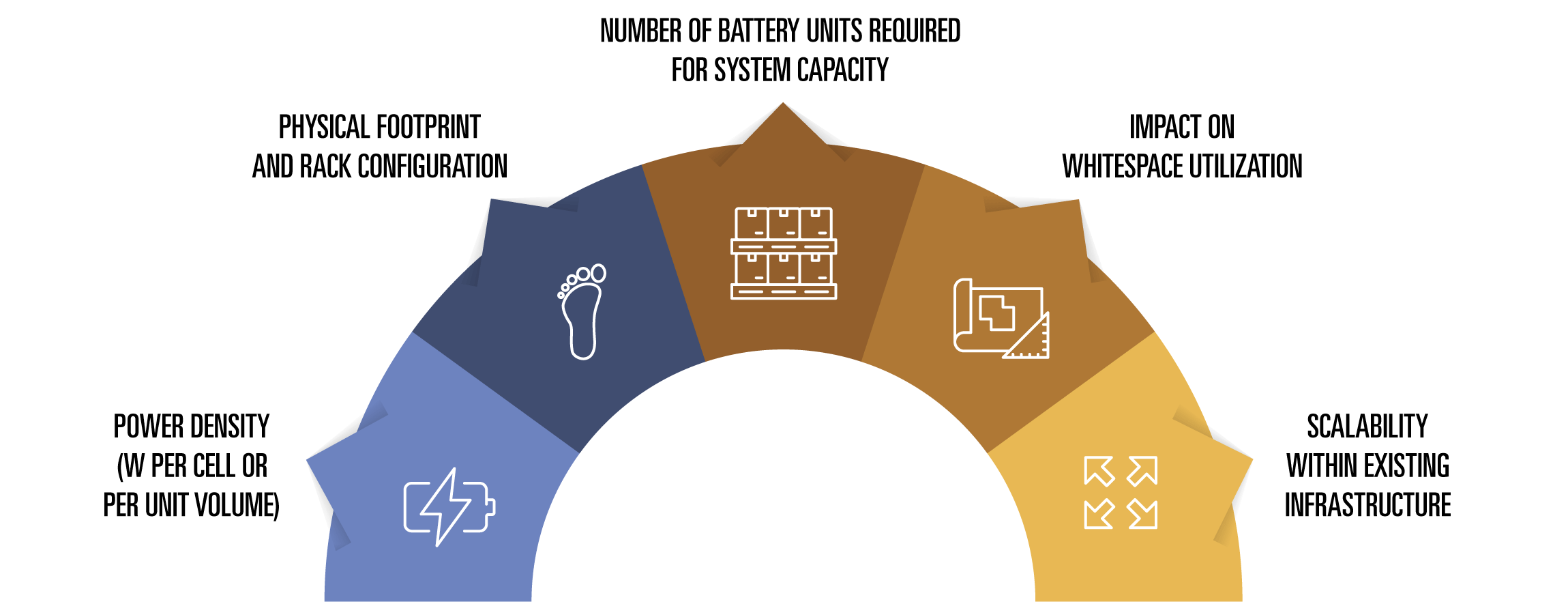
WHAT DEFINES ENERGY DENSITY AND FOOTPRINT EFFICIENCY IN UPS ENERGY STORAGE SYSTEMS?Energy density and footprint efficiency in UPS energy storage systems are typically evaluated across several factors:
These variables help determine how UPS energy storage systems influence space utilization and infrastructure efficiency in data centers. This framework provides a structured way to evaluate how UPS energy storage systems affect footprint efficiency and data center capacity planning. Runtime is a specification. Performance is an operating condition. |
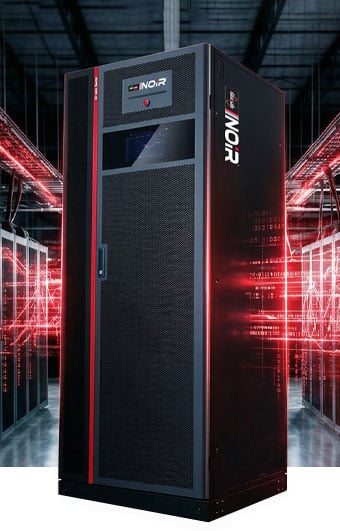
EnerSys DataSafe Noir™: High energy density for dynamic workloads without compromising on whitespace
Dynamic data center workloads are on the rise — especially from AI training in which entire GPU clusters can draw power in synchronicity.
Power demand can rise and fall rapidly. Under these conditions, data centers need UPS energy storage systems which are not just waiting to act as reserve power in the case of emergencies but are also ready to regularly assist with smoothing sudden power peaks.
EnerSys DataSafe Noir™ is a high-energy-density lithium-based energy storage system — made for dynamic workloads without compromising on whitespace.
Key features include:
• 40-70% reduction — in space compared with competitors.
• 600kW of power per cabinet — twice the energy density of the next best-performing competitor.
High energy density means data centers can meet backup power needs with minimal footprint.
|
|
The Thin Plate Pure Lead (TPPL) alternative: Freeing up whitespace without compromise
For data centers seeking more established UPS energy storage solutions, TPPL batteries can free up whitespace without compromising on performance.
Legacy lead-alloy batteries offer:
Thicker plates with lower energy density — meaning data centers may need a UPS energy storage system with a high footprint to meet their backup power needs.
EnerSys TPPL batteries offer:
Thinner pure lead plates delivering higher watts per cell (Wpc) — helping data centers leverage established UPS battery technology for reserve power without excessive footprint.
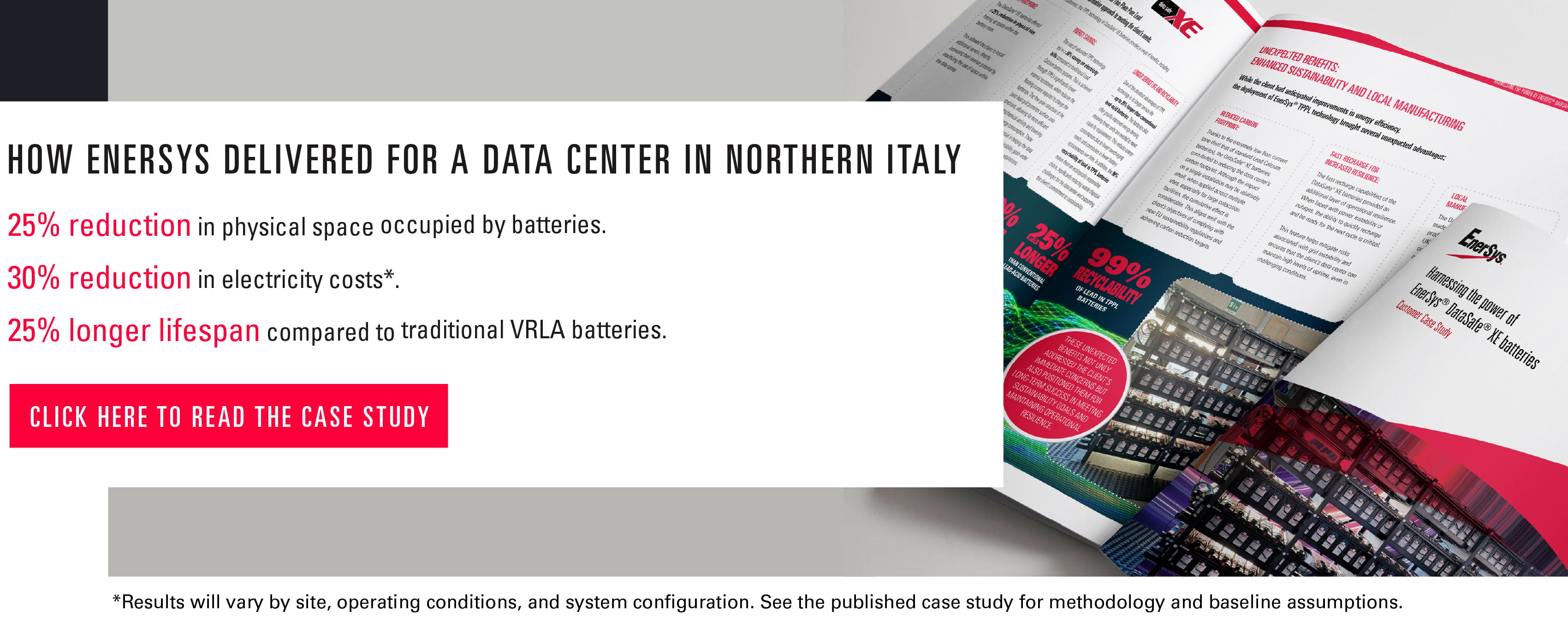
Read more: See how a major colocation data center near Milan, northern Italy reduced physical space occupied by batteries by around 25%*.
*Results will vary by site and operating conditions.
ADVANCED UPS ENERGY STORAGE SOLUTIONS FOR DATA CENTERS
UPS Energy Storage serves as the first layer of power resilience, providing the immediate power needed to keep critical systems running when disruptions occur.
Batterie