italiano
Centri elaborazione dati

Data Center Outages Are Declining, But Here’s Why You Still Need to Prepare

Data Center Outages Are Declining, But Here’s Why You Still Need to Prepare
HIGHLIGHTS
  • Data center outages are becoming less frequent, but that doesn’t mean the risk has gone.
  • Surging AI power demand, grid instability, and extreme weather are reshaping the energy landscape.
  • To stay resilient, operators need UPS batteries that recharge fast, minimizing vulnerability between events.
  • EnerSys advanced Thin Plate Pure Lead (TPPL) technology delivers up to 80% recharge in just 50 minutes, and helps data centers be ready for the next outage, whenever it strikes.

UPTIME HAS IMPROVED, BUT THE PRESSURE HASN’T EASED

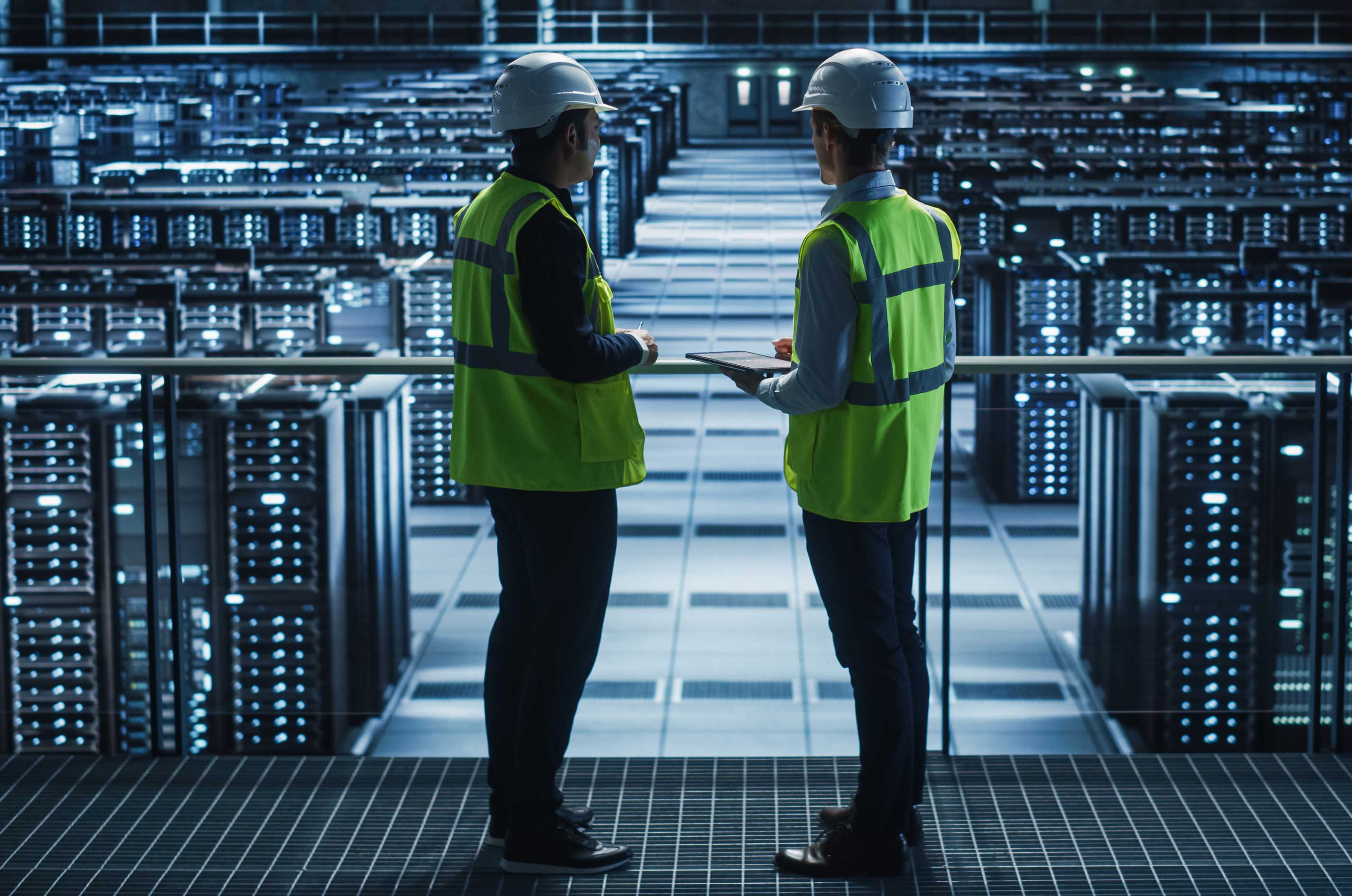
For most data center operators, uptime isn’t just a metric, it’s their reputation. And while the latest Uptime Institute data shows that outage frequency has continued to decline year-on-year, uncertainty across the energy landscape has reawakened old concerns.1 Surging AI workloads, unstable power grids, and extreme weather are creating new pressures that reliability alone can’t solve. In this environment, being able to recover quickly from an outage is just as important as preventing one.

If Outages Are Rarer, Why Worry?

Given the reported decline in outages, one might reasonably question whether there is still cause for concern.

However, the truth is, today’s data centers face more complexity than ever. Even a single outage incident can have multi-million-dollar consequences, and when one incident strikes, it’s essential to recharge your defenses… fast. That means ensuring your UPS batteries, which are your first line of protection, can return to full capacity quickly.

IS YOUR DATA CENTER READY FOR THE NEXT OUTAGE?
CLICK HERE TO FIND OUT HOW ENERSYS COULD HELP PROTECT YOU.

Learn how enersys can help


6 REASONS FAST RECHARGE STILL MATTERS

1. The Cost of Downtime Continues to Rise

While data center outages are declining, the cost of each incident is not. More than half of operators surveyed by the Uptime Institute said that in 2024, their latest severe outage cost more than $100,000, while almost one in five faced losses exceeding $1 million.2 Just because an outage is unlikely doesn’t mean it can’t sting a data center financially. If a data center has just experienced a costly outage, they don’t want another one to be just around the corner. A slow battery recharge cycle leaves your data center exposed if another outage occurs soon after.

2. Surging AI Power Demand

The rise of artificial intelligence is driving unprecedented electricity consumption. The International Energy Agency (IEA) projects that global electricity demand from data centers is expected to more than double by 2030, reaching 945 TWh annually—roughly equivalent to Japan’s entire electricity consumption.3 This surge, driven by energy-hungry AI workloads, is amplifying pressure on already strained local grids and backup systems.

declining-outages-renewable.jpg

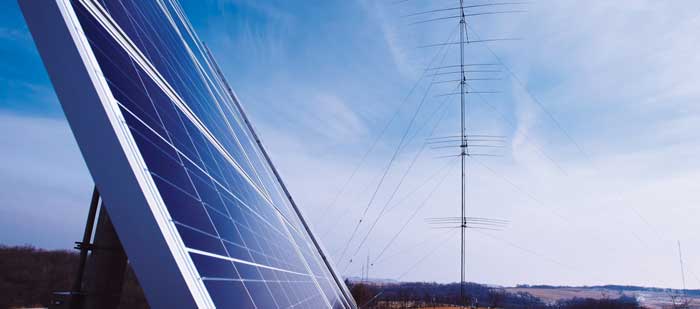
3. Renewable Energy Brings New Grid Challenges

The shift toward renewable energy is vital for sustainability, but it introduces new challenges for grid stability. The IEA notes that the increasing share of weather-dependent sources like solar and wind can cause frequency imbalances and voltage fluctuations, which are a known cause of unexpected power outages.4

Read more: Why Your Data Center’s Biggest Threat Might Be The Power Grid

4. Persistent High-Profile Blackouts

Recent large-scale incidents have underscored the fragility of power infrastructure:

  • In April 2025, a massive blackout affected tens of millions across Spain, Portugal, and parts of southern France, disrupting hospitals, transport, and communications.5
  • In March 2025, a fire at a substation near London Heathrow Airport led to the cancellation of over 1,300 flights, affecting up to 300,000 passengers and causing global travel chaos.6

Even the most modern infrastructure isn’t immune.

declining-outages-weather.jpg

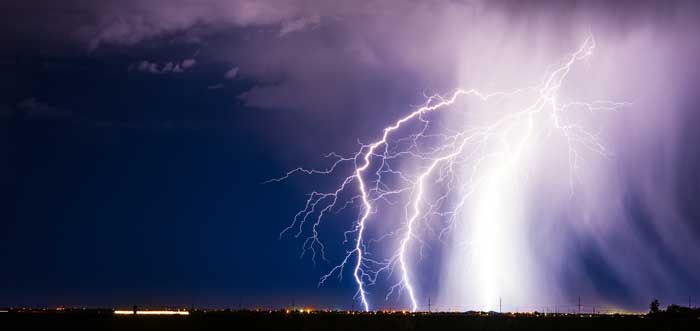
5. Rising Weather-Related Outages

In the United States, weather-related power outages have roughly doubled over the past two decades. Climate Central reports that 80% of major outages since 2000 were caused by severe storms, heatwaves, winter conditions, or hurricanes.7

As extreme weather becomes more frequent and intense, the risk to data centers grows.

6. Regulators Are Tightening Control

In response to these pressures, Governments around the world are reassessing how data centers connect to and interact with the power grid:

  • In Ireland, new proposals may require data centers to provide onsite or local generation and storage to match their demand, and to participate in the electricity market to support grid adequacy.8
  • In Texas, lawmakers have introduced a ‘kill switch’ mechanism (SB6) that would allow the state to disconnect data centers during emergencies to preserve grid stability.9

Preparedness for the next outage is no longer optional. It’s becoming a compliance expectation.

WHY RECHARGE SPEED DEFINES RESILIENCE

When outages strike, a data center’s first and most reliable line of defense is its battery backup UPS.

But what happens after they’ve done their job?

While every battery manufacturer promises ‘reliability,’ some may fail to mention another key aspect of resilience: recharge times, and many data centers underestimate the time it takes to recharge. Legacy lead-alloy batteries, which incorporate antimony or calcium to improve mechanical strength and reduce water loss, can take hours longer to recover, leaving critical systems vulnerable to a second disruption.

The answer lies in chemistry:

  • Higher internal resistance—non-lead alloys increase the internal resistance of the battery, which limits the current flow during charging.
  • Electrochemical kinetics—these alloys alter the grid’s surface characteristics, reducing the efficiency of the electrochemical reactions needed for rapid charge acceptance.
  • Heat management issues—slower charge acceptance means more energy is dissipated as heat, forcing charge rates to be throttled to prevent thermal runaway.

In an era where downtime is measured in dollars per second, this limitation can translate into higher operational risk and potential SLA breaches.

HOW TPPL TECHNOLOGY CHANGES THE EQUATION

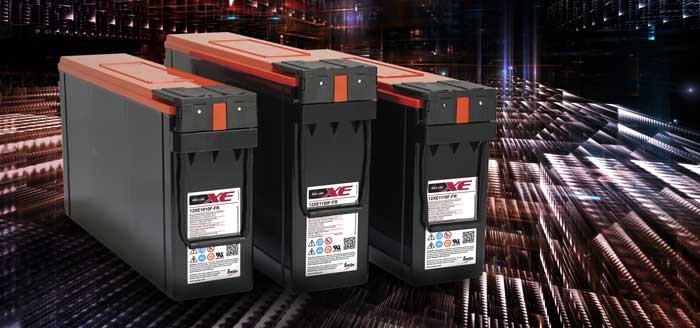
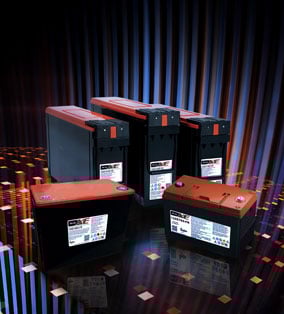
When it comes to backup power, speed matters. Thin Plate Pure Lead (TPPL) battery technology from EnerSys changes the game by enabling significantly faster recharge times without sacrificing longevity or safety.

declining-outages-datasafe.jpg

The Science Behind The Difference

TPPL batteries use extremely thin, high-purity lead plates, which dramatically increase the surface area available for electrochemical reactions. This design allows for:

  • Lower internal resistance, enabling higher charge acceptance without excessive heat buildup.
  • Greater energy density, meaning more power can be stored and delivered efficiently.
  • Improved ion diffusion, as the thin plates reduce the distance ions must travel during charge and discharge cycles.
  • Rapid recharge capability following a full depth of discharge, TPPL batteries can achieve 80% State of Charge (SoC) in around 50 minutes, 100% in under 2.5 hours.

This isn’t just a technical upgrade—it’s a strategic advantage for mission-critical environments. Faster recharge means shorter vulnerability windows and greater operational confidence.


DON'T JUST PREVENT OUTAGES, PREPARE FOR WHAT COMES AFTER 

Declining outage frequency doesn’t mean the risk has disappeared. It’s shifting, and becoming more unpredictable and more consequential.

Resilience now means recovering fast enough to stay ahead of the next disruption. For many data centers, that’s where legacy batteries become a hidden liability.

BUILD A PATH TO RESILIENCE

EnerSys doesn’t just deliver advanced battery technology. We also help you uncover where your operations can become more efficient and cost-effective. Get started in 4 simple steps:

1


FILL OUT THE FORM IN LESS THAN 5 MINUTES.

2


CONNECT WITH AN ENERSYS EXPERT TO REVIEW YOUR CURRENT SETUP.

3


GET A FREE, NO-OBLIGATION ANALYSIS HIGHLIGHTING RECHARGE EFFICIENCY
AND POTENTIAL COST SAVINGS.

4


RECEIVE A TAILORED QUOTE TO ENHANCE YOUR UPTIME STRATEGY.

Why Your Data Center’s Biggest Threat Might Be The Power Grid

According to the report, the number of data centre servers installed increased around 4% annually between 2010-2020. However, data centre electricity demand plateaued during this same period due to increased efficiency in operations.

READ MORE

REFERENCES
1. Uptime Institute. Annual Outage Analysis 2025. Uptime Intelligence Report, May 2025.
2. Uptime Institute (2025), Annual Outage Analysis.
3. International Energy Agency (IEA). AI is set to drive surging electricity demand from data centres while offering the potential to transform how the energy sector works. Published April 10, 2025. Available at: https://www.iea.org/news/ai-is-set-to-drive-surging-electricity-demand-from-data-centres-while-offering-the-potential-to-transform-how-the-energy-sector-works.
4. International Energy Agency (IEA). Renewables – Energy System. Accessed December 2025. Available at: https://www.iea.org/energy-system/renewables.
5. Institution of Engineering and Technology (IET). Spain and Portugal blackout traced to abrupt loss of power at Granada substation. Available at: Spain and Portugal blackout traced to abrupt loss of power at Granada substation | Engineering and Technology Magazine.
6. BBC News. Heathrow: Airport shutdown cause still unknown, report says. Published May 8, 2025. Available at: https://www.bbc.co.uk/news/articles/c6283577.
7. Climate Central. Weather-related Power Outages Rising. Published April 24, 2024. Available at: https://www.climatecentral.org/climate-matters/weather-related-power-outages-rising.
8. Commission for Regulation of Utilities (CRU). New Electricity Connection Policy for Data Centres. Published February 18, 2025. Available at: https://www.cru.ie/about-us/news/new-electricity-connection-policy-for-data-centre/.
9. E&E News by POLITICO. Rulemakers play catch-up as data centers multiply Rulemakers play catch-up as data centers multiply - E&E News by POLITICO.


Click HERE to contact an EnerSys® sales representative and find a battery backup UPS solution made for your data center.

About EnerSys

Sustainability


Caution Concerning Forward-Looking Statements
EnerSys is making this statement in order to satisfy the “Safe Harbor” provision contained in the Private Securities Litigation Reform Act of 1995. Any of the statements contained in this article that are not statements of historical fact may include forward-looking statements that involve a number of risks and uncertainties. A forward-looking statement predicts, projects, or uses future events as expectations or possibilities. Forward-looking statements may be based on expectations concerning future events and are subject to risks and uncertainties relating to operations and the economic environment, all of which are difficult to predict and many of which are beyond our control. For a discussion of such risks and uncertainties that could cause actual results to differ materially from those matters expressed in or implied by forward-looking statements, please see our risk factors as disclosed in the “Risk Factors” section of our annual report on Form 10-K for the most recently ended fiscal year. The statements in this article are made as of the date of this article, even if subsequently made available by EnerSys on its website or otherwise. EnerSys does not undertake any obligation to update or revise these statements to reflect events or circumstances occurring after the date of the article.