Deutsch

HIGH-RATE DISCHARGE AND RECHARGE PERFORMANCE FOR UPS APPLICATIONS

What does high-rate discharge and recharge performance for data center UPS applications mean?

High-rate discharge and recharge performance refers to the ability of a data center’s UPS energy storage system to deliver large amounts of power and restore its stored energy within a short period of time.

For many modern industry applications, high-rate discharge and recharge performance can be crucial to maintaining uptime.

Why EnerSys delivers for critical infrastructure

UPS energy storage systems play a critical role in maintaining data center uptime. They provide immediate power continuity during grid interruptions and help mitigate the effects of dynamic power swings.

In modern facilities, however, runtime alone is no longer the only variable that matters. Recharge readiness, high-rate discharge capability, and operating temperature range all influence how effectively a UPS energy storage system performs during and after a power event.

EVALUATE YOUR UPS ENERGY STORAGE PERFORMANCE PROFILE

Performance gaps in UPS energy storage systems are often linked to recharge performance, operating temperature limits, or lifecycle planning assumptions. Understanding these variables allows operators to evaluate whether their energy storage infrastructure aligns with modern data center operating conditions.

REQUEST A DATA CENTER UPS ENERGY STORAGE PERFORMANCE REVIEW

◼ Structured analytical review by an EnerSys data center specialist.
◼ Assessment of current UPS energy storage configuration and performance assumptions.
◼ Optional commercial proposal following technical review.

BOOK YOUR REVIEW TODAY

UPS energy storage as the first layer of power resilience

When a power interruption or dynamic workload event occurs, UPS energy storage systems provide the immediate energy required to maintain operations while backup generators start, grid supply is restored, or the spike in synchronized power draw is controlled. UPS energy storage systems therefore act as a critical bridge between primary power loss and secondary power availability.

Data center outages are less frequent, but the impact remains significant

The latest Uptime Institute Annual Outage Analysis shows encouraging progress: for the fifth consecutive year, both the frequency and severity of data center outages have continued to decline.1 This trend reflects industry-wide improvements in infrastructure reliability, risk management, and the adoption of advanced resiliency strategies. Infrastructure resilience has improved across the industry, even as demand for digital services grows at an unprecedented pace.

declining-outages-banner.jpg

Read more: Data Center Outages Are Declining, But Here’s Why You Still Need to Prepare

However, while outages are less frequent, their severe financial impact remains a threat. According to the Annual Outage Analysis report, 1 in 5 respondents said their most serious recent outage cost over $1 million for the second year in a row. This escalation underscores a critical reality: even a single failure can have significant operational and financial consequences for business and reputation.

declining-threat-banner.jpg

Read more: WHY YOUR DATA CENTER’S BIGGEST THREAT MIGHT BE THE POWER GRID


Dynamic workloads introduce new layer of complexity for UPS energy storage

Reserve power in case of an outage remains a key function of UPS energy storage systems. However, data centers with dynamic workload profiles can also require the same systems to regularly absorb sudden synchronized spikes in power demands.

For example, AI training — the process of building and refining AI models — can involve synchronized power draw across entire GPU clusters, as opposed to more dispersed user-driven demand.

Testing data by the North American Electric Reliability Corp (NERC) from a 50MW block within a 200MW AI training data center shows the fastest ramping period to be around 1.9 per unit per second for around 250 milliseconds.2

Dynamic workloads reinforce the importance of both high-rate discharge to be able to absorb spikes in demand, and high-rate recharge to be able to deal with consecutive events in quick succession.

Key preformance factors include:
◼ High-rate discharge capability.
◼ Recharge recovery time.
◼ Thermal operating range.
◼ Float-mode energy consumption.
◼ Lifecycle planning and recycling pathways.

These variables help determine whether a UPS energy storage system aligns with modern data center operating conditions.

Quick summary for data center operators

Modern UPS energy storage performance is typically evaluated across several operational criteria rather than runtime alone.

A performance-first UPS energy storage strategy focuses on:
• High-rate discharge capability — the ability to support short-duration, high-power UPS events.
• Recharge recovery time — how quickly the system returns to full readiness after an outage or power-spiking event.
• Thermal operating envelope — the temperature range in which the system can operate reliably.
• Float-mode energy consumption — the ongoing energy draw required to maintain system readiness.
• Lifecycle planning and recycling pathways — how the system is managed throughout their operational lifespan and at end of life.

Evaluating these factors provides a structured way to determine whether a UPS energy storage system aligns with the operational conditions of modern data centers.

FACTORS INFLUENCING DATA CENTER POWER RESILIENCE

datacenter-factors-2025-10.jpg

Dynamic workloads

  • Power demands from entire GPU clusters — serving applications such as AI training — can ramp up in a matter of milliseconds as shown by data from training campuses in North America.3
  • Sudden spikes in demand present challenges for backup power infrastructure which must be able to respond quickly to smooth peak power loads.

datacenter-factors-2025-10.jpg

Growing AI power demands

  • According to the International Energy Agency, global data center electricity use could reach approximately 945 TWh by 2030—roughly the equivalent usage of Japan’s current electricity consumption.4
  • A single AI rack can draw hundreds of kW to 1MW, which may place additional strain on grid capacity.

datacenter-factors-2025-12.jpg

The rise of renewables

  • The share of renewables in global electricity generation expected to rise from 32% in 2024 to 43% by 2030, which can increase the importance of grid frequency and voltage management.5
  • Data centers may require robust UPS battery backup to ride through grid fluctuations.

datacenter-factors-2025-09.jpg

Extreme weather

  • 80% of major U.S. outages since 2000 were weather-related.6
  • Longer restoration times may increase the importance of UPS autonomy and backup generation readiness.

datacenter-factors-2025-11.jpg

Tightening regulations

  • Texas SB6 “kill switch” allows ERCOT to curtail large loads during emergencies.7
  • Ireland’s new data center connection policy requires large centers (≥10 MVA) to provide onsite or nearby dispatchable generation or storage equal to their connection capacity, along with sourcing 80% of their annual electricity from new Irish renewable generation.8

These developments highlight the increasing role of onsite energy resilience strategies within data center design.

datacenter-factors-2025-13.jpg

Unexpected outages

  • The Heathrow outage in March 2025 disrupted 250k+ passengers; a blackout in Spain, Portugal, and parts of southern France in April 2025 hit tens of millions.9
  • The AWS outage in October 2025 caused multi-hour downtime for thousands of businesses, costs have been estimated to range from $38-581m.10

EVALUATE YOUR UPS BATTERY PERFORMANCE STRATEGY

Start your journey towards lower TCO in 4 easy steps:

1. FILL OUT THE FORM IN LESS THAN A MINUTE
2. HEAR BACK FROM AN ENERSYS REPRESENTATIVE
3. GET A FREE, NO-OBLIGATION ANALYSIS OF WHERE YOUR DATA CENTER MIGHT HAVE PERFORMANCE GAPS
4. RECEIVE TECHNICAL ANALYSIS AND, WHERE APPROPRIATE, A COMMERCIAL PROPOSAL ALIGNED WITH YOUR SITE REQUIREMENTS

BOOK YOUR EVALUATION NOW

Supporting performance-first UPS energy storage strategy

Legacy lead-alloy batteries are characterized by:

Faster degradation especially in high-density applications, such as AI training, HPC, etc.; risk of failure and subsequent downtime which may result in shorter service life in certain operating conditions.

Slower recharge times meaning you take longer to prepare for the next outage or may be unable to respond to a power-spiking event.

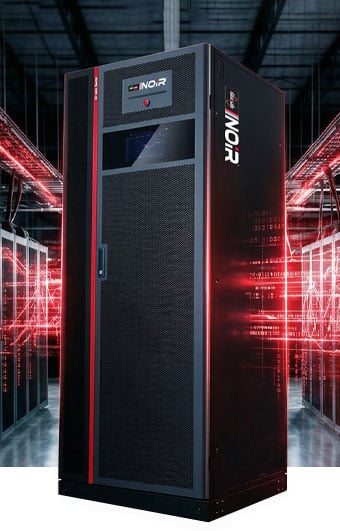
DataSafe Noir™: A UPS energy storage system made for dynamic workloads

Some data center workloads are not only about the scale of power but also about the speed at which demand can move — ramping up and down in synchronicity in a matter of milliseconds.

DataSafe Noir™ from EnerSys is a lithium-based energy storage system designed specifically for short-duration, high-power UPS applications. Crucially, the system can help data centers absorb sudden spikes in power demand, thus helping to keep dynamic movements in power demand under control.

DataSafe Noir™ has the following features which help with high-rate discharge and recharge performance:

Up to 600kW output power for when short-duration discharge performance matters.

98% round-trip efficiency and 1,000 + cycle life at 80% depth of discharge — engineered to handle repeated dynamic power events in quick succession.

Explore datasafe noir

The Thin Plate Pure Lead (TPPL) advantage

Advanced TPPL from EnerSys means:

Up to 25% longer lifespan in comparison with certain conventional lead-acid designs—helping to reduce the risk of failure and unforeseen downtime.

Faster recharge times —0%-80% state of charge in 50 minutes, so you’re ready for subsequent outage events.

Track-record of powering critical infrastructure:

  • Major hyperscale and colocation data centers.
  • System operators of electricity supply networks.
  • Mission-critical military applications.

ADVANCED UPS ENERGY STORAGE SOLUTIONS FOR DATA CENTERS

UPS Energy Storage serves as the first layer of power resilience, providing the immediate power needed to keep critical systems running when disruptions occur.

Batterien

DataSafe Noir™ Energiespeichersystem

Details anzeigen

DataSafe® XE-Batterien

Details anzeigen

DataSafe® HX+ Batterien

Details anzeigen

DataSafe® HX-Batterien

Details anzeigen

ODYSSEY® Performance Batterien

Details anzeigen

References
1. Uptime Institute. (2025). Annual Outage Analysis 2025. Available at: https://uptimeinstitute.com/resources/research-and-reports/annual-outage-analysis-2025
2. North American Electric Reliability Corporation (NERC), White Paper: Characteristics and Risks of Emerging Large Loads, July 2025, https://www.nerc.com/globalassets/who-we-are/standing-committees/rstc/3_doc_white-paper-characteristics-and-risks-of-emerging-large-loads.pdf.
3. North American Electric Reliability Corporation (NERC), White Paper: Characteristics and Risks of Emerging Large Loads, July 2025, https://www.nerc.com/globalassets/who-we-are/standing-committees/rstc/3_doc_white-paper-characteristics-and-risks-of-emerging-large-loads.pdf.
4. International Energy Agency (IEA). (2025). Executive Summary – Energy and AI. Available at: https://www.iea.org/reports/energy-and-ai/executive-summary
5. International Energy Agency (IEA). (2025). Renewables 2025: Renewable Electricity. Available at: https://www.iea.org/reports/renewables-2025/renewable-electricity
6. Climate Central. (2024). Weather-Related Power Outages Rising. Available at: https://www.climatecentral.org/climate-matters/weather-related-power-outages-rising
7. Plautz, J. (2025). Rulemakers play catch-up as data centers multiply. Available at: https://www.eenews.net/articles/rulemakers-play-catch-up-as-data-centers-multiply/
8. CRU, Large Energy User Connection Policy – Decision Paper, https://cruie-live-96ca64acab2247eca8a850a7e54b-5b34f62.divio-media.com/documents/CRU2025236_Large_Energy_User_connection_policy_decision_paper.pdf.
9. Sky News. (2025). ‘Catastrophic failure’ that led to Heathrow power outage revealed. Available at: https://news.sky.com/story/catastrophic-failure-that-led-to-heathrow-power-outage-revealed-as-report-outlines-missed-chances-to-prevent-it-13391266
10. Insurance Times, Loss estimate for AWS outage between $38m and $581m, https://www.insurancetimes.co.uk/news/loss-estimate-for-aws-outage-between-38m-and-581m/1456730.article.