français

Grid Resilience in 2026: The Recharge Gap Utilities Still Aren’t Measuring

Grid Resilience in 2026: The Recharge Gap Utilities Still Aren’t Measuring

Most utilities believe they understand their resilience.

They have specifications. They have autonomy calculations. They have compliance documentation.

What they often do not have is a verifiable understanding of how quickly their system is truly ready again. That’s a gap that matters.

WHAT IS GRID RESILIENCE IN UTILITIES?

Grid resilience is the ability of electrical infrastructure to withstand disruption, maintain critical operational functions, and rapidly restore those functions when they are compromised.

RESILIENCE IS NOT JUST ENDURANCE

The National Academies of Sciences define infrastructure resilience as the ability to prepare for, absorb, recover from, and adapt to adverse events.1

Most resilience discussions focus heavily on absorption. In other words, how long can a system operate during disruption.

RECOVERY RECEIVES LESS SCRUTINY.

The U.S. Department of Energy similarly distinguishes resilience from reliability by emphasizing recovery speed and adaptive capacity as core system attributes.2

In substation and generation environments, that distinction is not academic. It directly affects:

  • Protection relays and breaker control
  • Communications and SCADA continuity
  • Telemetry and coordination during restoration
  • Black start readiness

If those systems lose continuity during restoration, recovery slows. And when recovery slows, outage exposure increases. Resilience is not just about surviving disruption. It is about regaining full operational readiness both quickly and predictably.

WHY THE RECOVERY QUESTION IS MORE URGENT IN 2026

According to Deloitte’s 2026 Power & Utilities Industry Outlook:3

  • US peak electricity demand could grow approximately 26% by 2035.
  • Data center demand alone could reach 176 GW.
  • The first half of 2025 saw 15 US disasters exceeding $1 billion in damages.

At the same time, electrification and grid modernization are increasing system interdependencies, raising the complexity of restoration.4

MORE LOAD. MORE DIGITAL INFRASTRUCTURE. MORE VOLATILITY.

As event frequency and system sensitivity increase, the interval between disruptions can shrink. That makes recovery speed operationally significant, and in tightly coupled systems, recovery time becomes a risk variable.

THE AUTONOMY ASSUMPTION

In many engineering and procurement discussions, resilience is reduced to runtime.

Or, simply put, “How many hours?”

It is a clean metric. It fits neatly into specifications. It satisfies compliance reviews. But runtime answers only one question, and that’s how long the system can operate after failure. It does not answer how quickly the system is fully ready for the next disruption.

RUNTIME IS A SPECIFICATION NUMBER. RECOVERY IS AN OPERATIONAL REALITY. THEY ARE NOT THE SAME.

In modern grids, increasingly digitized and interdependent, restoration depends heavily on continuous DC support for protection, control, and communications. IEEE research reinforces the foundational role of substation DC systems in maintaining protection integrity during disturbances.5

When AC supply fails, DC continuity becomes the operational backbone. If recharge lags during restoration, that backbone can weaken at a critical moment.

grid-risilence-watch.jpg


WHAT IS THE RECHARGE GAP?

The recharge gap is the period between battery discharge and full restoration of operational readiness.

Across substation modernization and retrofit reviews, one recurring pattern emerges:

AUTONOMY IS CAREFULLY ENGINEERED. RECHARGE RECOVERY IS OFTEN ASSUMED.

In a typical substation assessment scenario, a DC system may be sized for extended runtime and meet all documented requirements. On paper, resilience appeared strong.

However, when recharge behavior is modeled under realistic current limits and ambient temperatures, recovery to a high state of charge can require several hours following a full discharge.

A second disruption inside that window may not have been evaluated. Compliance does not always equal recovery readiness. Theoretically, requirements were met. Under compounding events, recovery certainty was less clear.

This exposure window, between discharge and restored readiness, is what can be described as the recharge gap. It is rarely visible in specifications, and it is seldom reflected in dashboards. But operationally, it is a real concern.

FIVE QUESTIONS THAT REVEAL TRUE RESILIENCE

To understand continuity performance more completely, utilities should evaluate more than autonomy alone.

What is the discharge duration under real environmental conditions? 

First, what is time-to-ready?

Time-to-ready is the duration required for a backup power system to return to a high state of charge after discharge, restoring full operational readiness.

When assessing continuity performance, it’s critical to assess how quickly the system returns to a high state of charge under realistic recharge constraints.

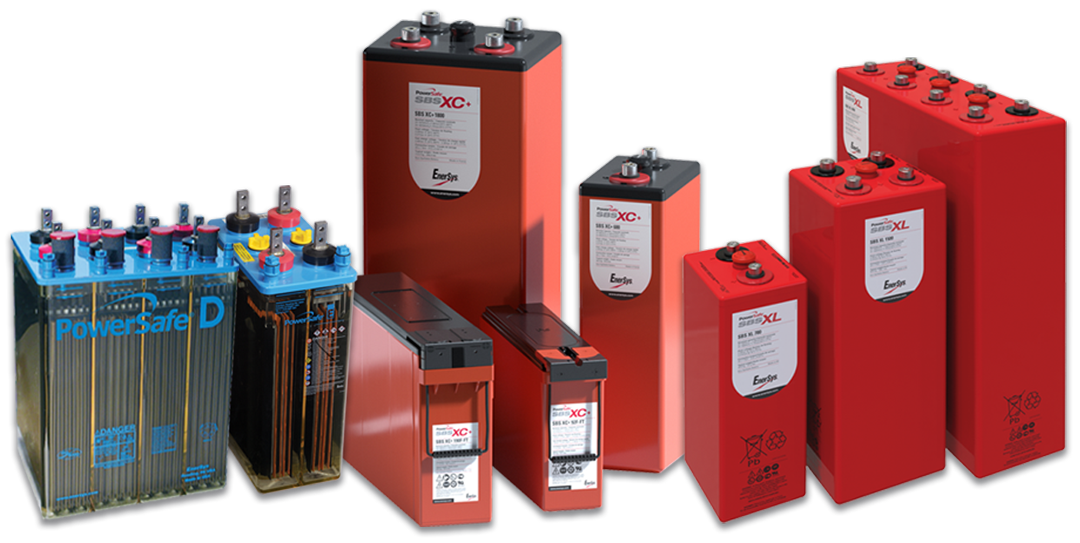
EnerSys reserve power systems with Thin Plate Pure Lead (TPPL) technology are engineered for high charge acceptance. They can accept 1C recharge rates up to approximately 80–85% State of Charge (SoC), with the potential to reach around 80% SoC in roughly 50 minutes under appropriate recharge conditions.

Recharge performance directly influences how long the system remains exposed between events.

How reliant is the system on routine manual intervention?

TPPL technology-based battery designs reduce watering and servicing requirements compared with traditional flooded batteries, helping to reduce site visits and operational variability across dispersed assets.

Are performance assumptions aligned with real-world ambient conditions?

PowerSafe® batteries are designed for wide operating temperature ranges — from -40°C to +50°C (-40°F to +122°F) for certain models — supporting deployment in challenging environments.

Autonomy calculations that do not reflect site conditions can overstate resilience.

Is readiness measurable in real time?

Modern DC systems can integrate monitoring capabilities that provide visibility into state of charge and battery health, reducing uncertainty around recovery status. These questions shift the conversation from capacity alone to continuity performance.


BLACK START AND RESTORATION DEPEND ON RECOVERY

Black start readiness requires restoration without relying on external grid supply. That depends not only on available energy, but on continuity power remaining stable throughout restoration cycles.

Deloitte emphasizes the pressure utilities face to scale capacity and maintain reliability under rising demand and volatility. The National Academies and DOE both reinforce that resilience must include recovery and adaptation, not simply endurance.

In that context, recharge behavior becomes strategically relevant.

Resilience is not only how long a system can operate. It is how reliably it can recover. Most operational strain is not caused by missing capacity, it is caused by assumed readiness.

A PRACTICAL STEP

Run a two-event scenario:

1. Model full discharge under realistic environmental conditions.
2. Model recharge under actual current constraints.
3. Introduce a second disruption before full readiness.
4. Evaluate operational exposure.


Many utilities have strong autonomy design. Fewer have quantified recovery velocity under compounding disruption.

In 2026, resilience will not be judged only by what was installed. It will be judged by how quickly systems are ready again.


1. National Academies of Sciences, Enhancing the Resilience of the Nation’s Electricity System: https://nap.nationalacademies.org/catalog/24836/enhancing-the-resilience-of-the-nations-electricity-system
2. U.S. Department of Energy, Grid Modernization Lab Consortium (GMLC) – Resilience Resources: https://gmlc.doe.gov/projects/resilience
3. Deloitte, 2026 Power and Utilities Industry Outlook: https://www.deloitte.com/us/en/insights/industry/power-and-utilities/power-and-utilities-industry-outlook.html
4. MIT Energy Initiative, Electric Power Systems and Grid Modernization Research: https://energy.mit.edu/research/electric-power-systems/
5. IEEE, Transactions on Power Systems: https://ieeexplore.ieee.org/xpl/RecentIssue.jsp?punumber=59

About EnerSys

Sustainability


Caution Concerning Forward-Looking Statements
EnerSys is making this statement in order to satisfy the “Safe Harbor” provision contained in the Private Securities Litigation Reform Act of 1995. Any of the statements contained in this article that are not statements of historical fact may include forward-looking statements that involve a number of risks and uncertainties. A forward-looking statement predicts, projects, or uses future events as expectations or possibilities. Forward-looking statements may be based on expectations concerning future events and are subject to risks and uncertainties relating to operations and the economic environment, all of which are difficult to predict and many of which are beyond our control. For a discussion of such risks and uncertainties that could cause actual results to differ materially from those matters expressed in or implied by forward-looking statements, please see our risk factors as disclosed in the “Risk Factors” section of our annual report on Form 10-K for the most recently ended fiscal year. The statements in this article are made as of the date of this article, even if subsequently made available by EnerSys on its website or otherwise. EnerSys does not undertake any obligation to update or revise these statements to reflect events or circumstances occurring after the date of the article.

UNLEASH YOUR POWER POTENTIAL

blog-industrial-trends.png

Powering the future requires more than legacy solutions. EnerSys® batteries are engineered to outperform conventional solutions, offering:

■ Industry-leading backup power reliability for critical systems

■ Scalable solutions tailored to industrial and utility applications

■ Low-maintenance with long service life, reducing total costs

■ Sustainable performance with established recyclability

CONNECT WITH A MEMBER OF THE ENERSYS TEAM TODAY. 

Contact us today