4. Persistent High-Profile Blackouts
Recent large-scale incidents have underscored the fragility of power infrastructure:
- In April 2025, a massive blackout affected tens of millions across Spain, Portugal, and parts of southern France, disrupting hospitals, transport, and communications.5
- In March 2025, a fire at a substation near London Heathrow Airport led to the cancellation of over 1,300 flights, affecting up to 300,000 passengers and causing global travel chaos.6
Even the most modern infrastructure isn’t immune.
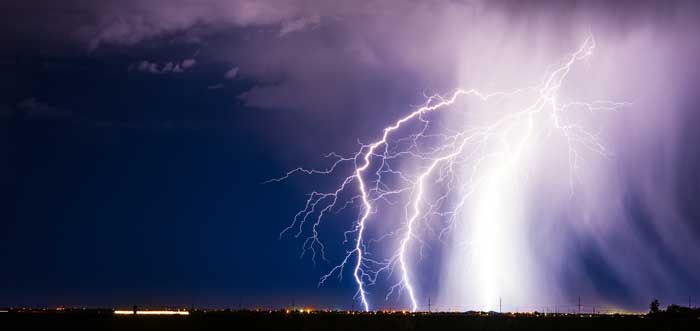
5. Rising Weather-Related Outages
In the United States, weather-related power outages have roughly doubled over the past two decades. Climate Central reports that 80% of major outages since 2000 were caused by severe storms, heatwaves, winter conditions, or hurricanes.7
As extreme weather becomes more frequent and intense, the risk to data centers grows.
6. Regulators Are Tightening Control
In response to these pressures, Governments around the world are reassessing how data centers connect to and interact with the power grid:
- In Ireland, new proposals may require data centers to provide onsite or local generation and storage to match their demand, and to participate in the electricity market to support grid adequacy.8
- In Texas, lawmakers have introduced a ‘kill switch’ mechanism (SB6) that would allow the state to disconnect data centers during emergencies to preserve grid stability.9
Preparedness for the next outage is no longer optional. It’s becoming a compliance expectation.
WHY RECHARGE SPEED DEFINES RESILIENCE
When outages strike, a data center’s first and most reliable line of defense is its battery backup UPS.
But what happens after they’ve done their job?
While every battery manufacturer promises ‘reliability,’ some may fail to mention another key aspect of resilience: recharge times, and many data centers underestimate the time it takes to recharge. Legacy lead-alloy batteries, which incorporate antimony or calcium to improve mechanical strength and reduce water loss, can take hours longer to recover, leaving critical systems vulnerable to a second disruption.
The answer lies in chemistry:
- Higher internal resistance—non-lead alloys increase the internal resistance of the battery, which limits the current flow during charging.
- Electrochemical kinetics—these alloys alter the grid’s surface characteristics, reducing the efficiency of the electrochemical reactions needed for rapid charge acceptance.
- Heat management issues—slower charge acceptance means more energy is dissipated as heat, forcing charge rates to be throttled to prevent thermal runaway.
In an era where downtime is measured in dollars per second, this limitation can translate into higher operational risk and potential SLA breaches.
HOW TPPL TECHNOLOGY CHANGES THE EQUATION
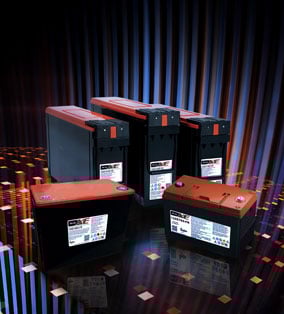
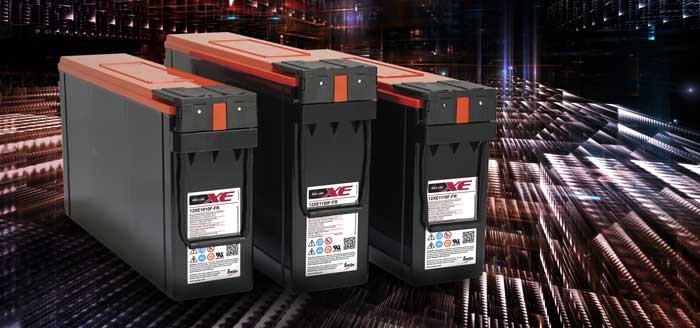
When it comes to backup power, speed matters. Thin Plate Pure Lead (TPPL) battery technology from EnerSys changes the game by enabling significantly faster recharge times without sacrificing longevity or safety.
The Science Behind The Difference
TPPL batteries use extremely thin, high-purity lead plates, which dramatically increase the surface area available for electrochemical reactions. This design allows for:
- Lower internal resistance, enabling higher charge acceptance without excessive heat buildup.
- Greater energy density, meaning more power can be stored and delivered efficiently.
- Improved ion diffusion, as the thin plates reduce the distance ions must travel during charge and discharge cycles.
- Rapid recharge capability following a full depth of discharge, TPPL batteries can achieve 80% State of Charge (SoC) in around 50 minutes, 100% in under 2.5 hours.
This isn’t just a technical upgrade—it’s a strategic advantage for mission-critical environments. Faster recharge means shorter vulnerability windows and greater operational confidence.
|
DON'T JUST PREVENT OUTAGES, PREPARE FOR WHAT COMES AFTER
Declining outage frequency doesn’t mean the risk has disappeared. It’s shifting, and becoming more unpredictable and more consequential.
Resilience now means recovering fast enough to stay ahead of the next disruption. For many data centers, that’s where legacy batteries become a hidden liability.