As we enter 2026, the data center industry should be under no illusions, it is approaching a period where long-term assumptions around power, space, and resilience are being tested. In 2026, data center competitiveness will increasingly be defined by how effectively operators manage power, space, and resilience as interconnected strategic constraints.
1. AI POWER DEMAND: IT’S NOT GOING AWAY

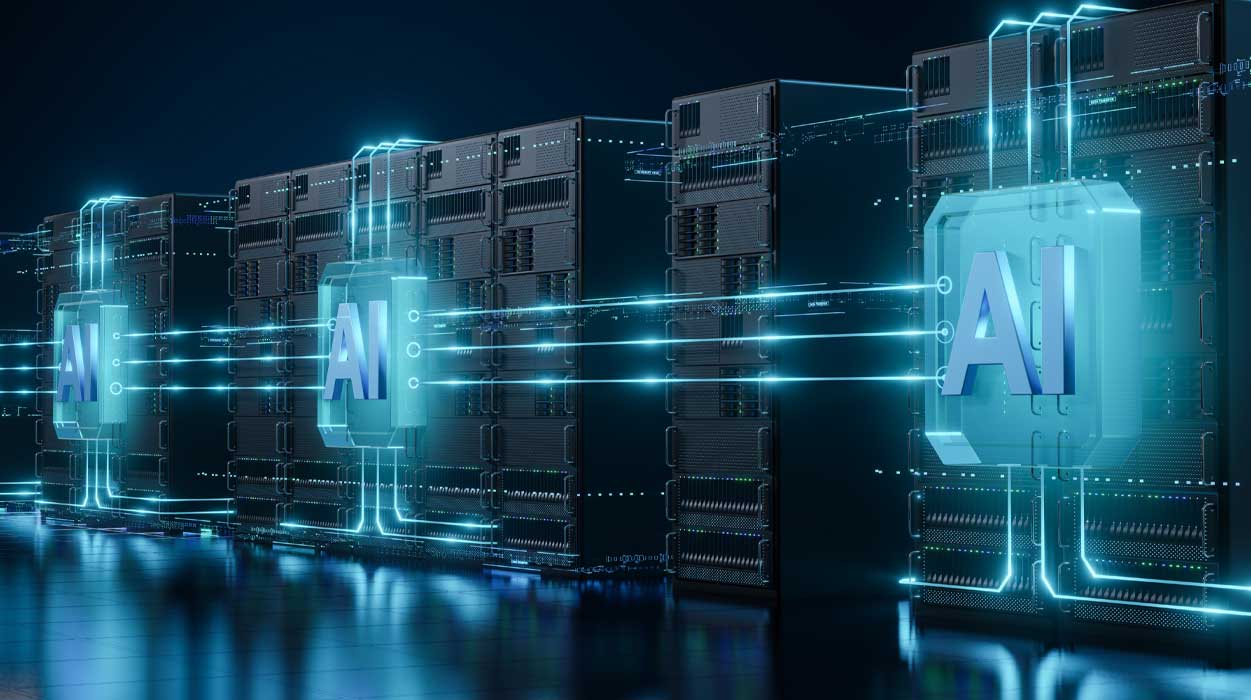
Artificial Intelligence is reshaping the global data center landscape—and it’s doing so with an insatiable appetite for power. According to the International Energy Agency (IEA), electricity consumption from data centers, AI, and cryptocurrency could reach 945TWh by 2030, roughly equivalent to the entire electricity consumption of Japan.1 McKinsey & Company estimates that meeting this demand will require $7 trillion in capital investment, with AI being the primary driver behind this surge.2
This exponential growth presents a significant challenge: a strained power grid and a potentially fragile energy supply. As data centers scale to support AI workloads, operators face mounting pressure to secure reliable power. The key question is how data centers will adapt to ensure uninterrupted operations in the face of these power constraints.
What’s becoming clear is that power is no longer just an operational input—it’s now a strategic constraint. How operators secure, manage, and protect energy will increasingly define their ability to scale AI workloads without compromising resilience.
2. DOWNTIME: LESS FREQUENT BUT STILL COSTLY
While outages may be occurring less frequently, their consequences are becoming more severe. Despite surging power demands from AI applications, Uptime Institute’s 2025 Annual Outage Analysis reveals a promising trend: for the fourth year in a row, overall data center outage frequency and severity are declining.3 However, the report also highlights a striking concern: 1 in 5 respondents say their most recent severe outage cost over $1 million, with 54% reporting losses above $100,000.

These outages can extend beyond financial statements. Consider the AWS incident in October 2025, which analysts estimate caused between $38 million and $581 million in insured losses globally.4 Beyond the dollar figures, such events can inflict substantial reputational damage. A clear trend is emerging that fewer outages does not mean lower risk. In fact, as workloads become more critical and interconnected, the impact of a single failure continues to grow.
3. REGULATORS GET NERVOUS
As data center power demand rises, regulatory scrutiny is no longer limited to isolated markets. It is becoming a global concern.
The surge in data center power demand hasn’t just caught the attention of industry leaders—it’s now firmly on the radar of regulators. With grids potentially straining under the weight of data center workloads, governments are introducing measures to safeguard energy stability.
In Ireland
The Commission for Regulation of Utilities (CRU) has now published its final Large Energy User Connection Policy. 5Under this policy, new data centers seeking grid connections must match their demand with equivalent onsite or local generation or storage capacity, and meet an 80% renewable energy target through a phased approach. This marks a significant shift toward ensuring that data centers contribute to grid resilience rather than exacerbate vulnerabilities.
In Texas
Senate Bill 6 (SB6) mandates a “kill switch” function, giving grid operators the authority to disconnect data centers during emergencies to protect overall grid integrity.6 While these policies differ by region, they signal a broader shift: data centers are increasingly expected to support grid stability, not simply draw from it.
These developments underscore a growing trend of regulatory scrutiny. Operators may need to prepare for further interventions in 2026 and beyond. For data centers, this means planning for compliance while maintaining operational continuity—a balancing act that will only become more complex as energy pressures mount.
4. SPACE AT A PREMIUM
Space in the data center industry is becoming increasingly scarce—and the AI boom is a major driver behind this trend. According to CBRE’s North America Data Center Trends H1 2025, vacancy rates in primary U.S. markets such as Northern Virginia, Chicago, Atlanta, and Phoenix fell to a record-low 1.6%, the tightest ever recorded.7 At the same time, rental rates surged: asking prices for mid-sized deployments (250–500 kW Tier III/N+1) rose 2.5% from late 2024, while large-scale builds (10 MW+) saw increases of up to 19%, fueled by power scarcity and hyperscale demand.
Europe is experiencing similar pressure. In major hubs like London, Frankfurt, Paris, and Amsterdam, vacancy dropped to 7.4%, down from roughly 10.6% a year earlier. Rental rates climbed globally by 3.3% year-over-year, with Amsterdam leading at 18%, followed closely by Northern Virginia (+17.6%) and Chicago (+17.2%).8
This squeeze isn’t just about square footage—it’s about power availability. Even with a 17.6% increase in new supply across North America, strong pre-leasing (over 74% of builds committed) underscores how limited access to power is shaping site selection. Operators appear to be increasingly exploring secondary and tertiary markets where land and energy are more accessible, signaling a shift away from traditional Tier-1 hubs.
With space and power at a premium, the industry must think strategically about how to fully utilize the capacity they have. Every square foot and every megawatt counts in the race to support AI-driven growth.
In this environment, optimizing how space and power are allocated within the facility is no longer just a design challenge, it’s a commercial imperative.
5. COSTS REMAIN 'TOP CONCERN'
Cost pressures continue to dominate decision-making for data center operators, but the challenge is no longer simply about reducing spend.9 It’s about balancing rising operational costs against growing expectations for uptime, lifecycle management, and regulatory compliance. Operational expenditures (OpEx) remain high, particularly in areas such as electricity and cooling—two of the most resource-intensive components of data center operations.
This challenge is compounded by rising energy demand. Gartner projects that electricity consumption by data centers grew by 16% in 2025 and is expected to double by 2030.10 As demand surges, energy costs could follow suit, creating additional financial strain for operators. To stay competitive and sustainable, the industry must adopt an all-encompassing approach to cost optimization—one that addresses every facet of operations.
The risk for operators is not simply higher costs, but fragmented strategies that address symptoms rather than underlying drivers.
KEY TAKEAWAYS FOR DATA CENTERS IN 2026
BY 2026, POWER AVAILABILITY WILL INCREASINGLY CONSTRAIN DATA CENTER GROWTH, OFTEN MORE THAN COMPUTE CAPACITY ITSELF.
REGULATION IS RESHAPING DATA CENTER ENERGY STRATEGY, WITH OPERATORS EXPECTED TO ACTIVELY SUPPORT GRID STABILITY RATHER THAN SIMPLY CONSUME POWER.
|
ARE TODAY’S POWER STRATEGIES FIT FOR PURPOSE?
Taken together, these trends point to a common challenge: traditional approaches to backup power and energy storage may no longer align with the realities data centers face heading into 2026. Operators that take a rounded view of power, across resilience, space, cost, and compliance, will be better positioned to adapt.
Meeting the challenges of the modern industry landscape is no small feat. Unfortunately, too many data centers fail to take a sufficiently holistic approach to optimizing their operations—resulting in hidden costs and lost opportunities.