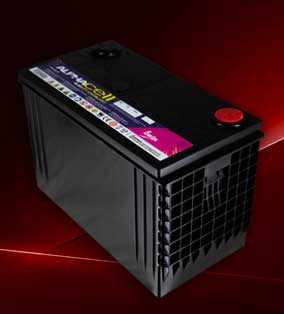
Processing equipment for cable broadband and communications networks across North America continue to push further into neighborhoods and edge environments. As that footprint grows, more batteries are operating inside enclosures where temperature is not controlled.
These cabinets are frequently exposed to prolonged high-temperature exposure due to solar loading and passive ventilation only goes so far. Over time, environmental exposure shifts from an operating condition to a measurable cost driver.
Industry maintenance guidance for valve-regulated lead-acid (VRLA) batteries, including IEEE Std 1188™, recognizes that operating temperature directly influences battery service life and maintenance intervals. Yet many replacement strategies are still based on nominal 77°F (25°C) assumptions rather than real outdoor exposure.
When batteries operate under elevated ambient conditions for extended periods, float current often increases as internal reaction rates change, and replacement intervals can shorten. In large-scale outdoor battery enclosures, even small changes in float current can affect network-level operating cost.
WHAT DRIVES INTERVAL VARIABILITY IN OUTDOOR BATTERY ENCLOSURES?
In outdoor broadband battery enclosures, interval variability describes the cumulative operating impact that occurs when sustained elevated operating conditions influence float current behavior, degradation rates, and replacement intervals over time.
IEEE maintenance practices acknowledge that higher temperatures materially affect expected battery longevity. As temperature rises above nominal operating conditions, degradation mechanisms accelerate.
In real-world broadband deployments, this often surfaces later as:
- Increased energy consumption
- Higher float current over time
- Reduced capacity retention
- Earlier-than-planned battery replacement
For operators managing hundreds or thousands of distributed outdoor sites, these effects compound gradually.
In outdoor battery enclosures, total cost over time is driven by replacement interval and continuous energy load, not simply purchase price. When sustained heat tightens replacement cycles, labor, travel, site access, and energy costs repeat more frequently across distributed sites. In large networks, small interval shifts compound into measurable operating expense.
WHY ENVIRONMENTAL EXPOSURE INFLUENCES INFRASTRUCTURE RELIABILITY
Infrastructure deployed in central offices and outside plant environments in North America is typically evaluated against Telcordia (formerly Bellcore) GR-63-CORE and GR-1089-CORE requirements under the Network Equipment Building System (NEBS) framework. These standards address environmental robustness, thermal performance, and system reliability.

Outdoor battery enclosures, by design, operate closer to environmental limits than climate-controlled facilities. Typical field conditions include:
- Prolonged operating temperatures above 77°F (25°C)
- Cooling is limited or passive
- Solar-driven internal temperature spikes
- Extended maintenance intervals
It is widely recognized in lead-acid battery engineering principles that sustained elevated operating conditions can accelerate electrochemical reaction rates and reduce expected service life.
In distributed cable broadband networks, this difference between laboratory assumptions and field conditions directly influences battery replacement planning and lifecycle cost.
THE ROLE OF FLOAT CURRENT IN INTERVAL STABILITY AND OPERATING COST
Float current is the continuous energy required to maintain a fully charged battery. IEEE maintenance guidance notes that float current levels typically rise with both temperature and age as internal resistance and reaction dynamics change.
When float current increases under sustained elevated operating conditions:
- Energy consumption rises across sites
- Internal battery temperature may escalate further
- Corrosion and water loss mechanisms can accelerate
- Capacity retention and performance consistency may decline over time
In large networks of outdoor battery enclosures, these incremental increases translate into measurable operating cost.
For North American operators, float current behavior becomes a financial variable by directly influencing long-term OPEX.
Electrochemical stability during float operation becomes the foundation for maintaining predictable replacement intervals under variable environmental exposure.
SAFETY AND COMPLIANCE CONSIDERATIONS
Battery systems deployed in North America are generally designed to meet applicable safety standards such as UL and CSA requirements governing stationary and industrial battery installations. These standards define electrical safety, fire protection, and installation criteria for battery systems operating in communications network environments.
While safety certification ensures compliance with installation and operational safety requirements, it does not eliminate the operational influence of extended thermal stress on lifecycle performance. Managing temperature-driven degradation remains a design and selection consideration in outdoor enclosures.
|
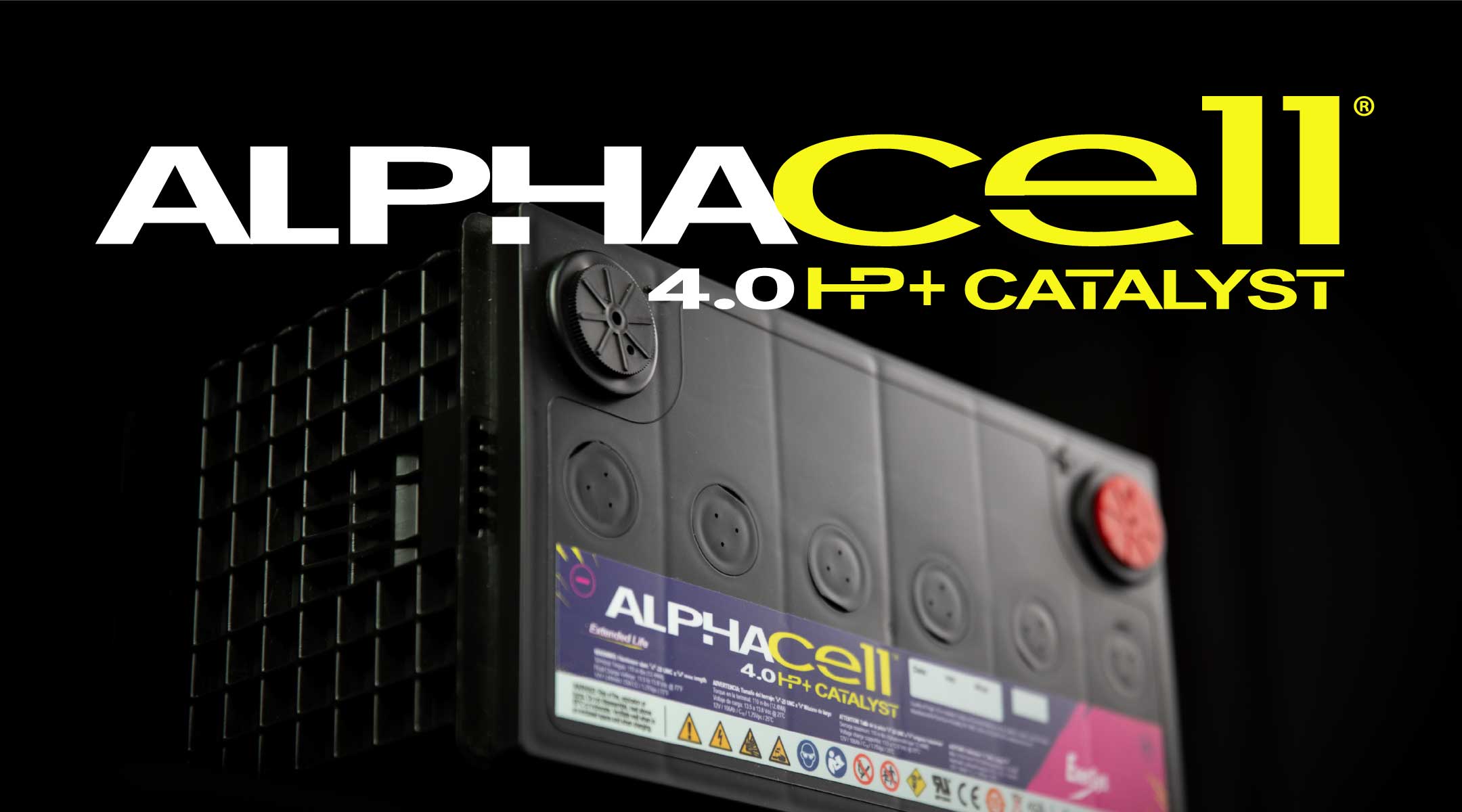
WHAT IS THE ALPHACELL™ 4.0HP+ BATTERY?
AlphaCell™ 4.0HP+ is a Thin Plate Pure Lead (TPPL) battery designed as an electrochemically stable platform for distributed outdoor and edge communications networks in North America. It incorporates an integrated catalyst designed to promote internal gas recombination, helping stabilize electrochemical battery behavior during float operation, particularly under sustained temperature exposure.
By moderating heat-driven electrochemical variability, AlphaCell™ 4.0HP+ is designed to help:
- Regulate float current behavior
- Reduce sensitivity to operating variability
- Support improved capacity retention
- Improve consistency across distributed outdoor deployments
Testing and prior experience with catalyst-enhanced TPPL designs have demonstrated measurable differences under elevated temperature conditions, including lower float current and improved capacity retention compared to non-catalyst TPPL designs.*
*Based on internal accelerated life testing at 131°F (55°C) and historical performance data that has demonstrated improved capacity retention compared to non-catalyst TPPL designs under controlled conditions. Actual results may vary depending on operating conditions, enclosure design, and system configuration.
Learn More about the AlphaCell™ 4.0HP+
WHEN ENVIRONMENTAL EXPOSURE INFLUENCES REPLACEMENT STRATEGY
Not every site experiences the same temperature profile. However, AlphaCell™ 4.0HP+ batteries are particularly relevant where interval stability and operating exposure influence lifecycle planning, including:
- Outdoor battery enclosures in cable broadband and communications networks operate under extended thermal stress
- Replacement cost exceeds initial battery purchase price
- Service access is limited or costly
- Reduced-touch operating models are in place
- Environmental robustness aligned with NEBS expectations is required
In these cases, battery behavior under elevated operating exposure directly affects replacement planning and lifecycle cost.
|
FROM ENVIRONMENTAL VARIABLE TO MANAGED RISK
Environmental exposure is inherent in outdoor battery enclosures.
The question for cable broadband operators is whether its impact is understood and managed in line with recognized industry guidance.
By evaluating:
- Float current behavior over time
- Internal heat generation under sustained temperature exposure
- Capacity retention trends
- Replacement cycle economics
… operators can align battery selection with long-term network performance objectives.
EVALUATING THE IMPACT OF UNCONTROLLED OPERATING CONDITIONS IN YOUR NETWORK
Sustained operation above 77°F (25°C) can influence float current behavior, degradation rates, and replacement timing across distributed sites.
EnerSys works with North American cable broadband operators across distributed outdoor deployments to align battery strategy with long-term network performance.
Request an Interval Stability Review to validate exposure risk across your network.