français
Centres de données

Why Modern Data Centers Need a New Approach to UPS Batteries

Why Modern Data Centers Need a New Approach to UPS Batteries

HOW CHANGING OPERATING CONDITIONS ARE RESHAPING BATTERY PERFORMANCE, AND WHAT OPERATORS CAN DO TO STAY AHEAD

The data center environment in North America has changed quickly over the past few years. Rising power density, higher ambient temperatures, accelerated AI adoption, and more demanding uptime expectations are reshaping how facilities operate.

Yet one part of the power infrastructure often continues on an old schedule: the UPS battery refresh cycle.

Across many U.S. data centers, operators are noticing that UPS batteries, particularly VRLA-technology based designs, are responding differently as environments evolve. VRLA technology continues to deliver strong performance in many scenarios, but conditions inside today’s data halls influence aging patterns in ways not seen a decade ago.

This gap between planned replacement and real-world performance is becoming a meaningful planning factor for operators focused on uptime and cost control in mission-critical environments.

Historically, data centers replaced UPS batteries by following a calendar interval. But several trends are redefining how batteries age today:

1. Higher ambient temperatures

Many facilities have increased temperature setpoints to reduce cooling costs. But even small temperature rises accelerate battery aging and reduce service life.

2. Denser racks and more rapid load transitions 

AI workloads and modern virtualization strategies demand higher power density and can trigger fast changes in power draw.

3. More frequent cycling and grid disturbances

Shorter autonomy windows (5–15 minutes) mean UPS batteries experience more charge/discharge events than in the past.

4. Increased float current and heat output 

As batteries age under modern conditions, internal resistance rises. That drives up float current, which is one of the most overlooked contributors to energy use and cooling load.

These trends rarely cause sudden failure. Instead, they lead to runtime drift, slower recharge, and increased operating cost long before batteries are due for scheduled replacement.

VRLA-technology based batteries continue to meet expectations in many environments, but evolving conditions are prompting some operators to consider battery options that offer additional performance margin.

When UPS behavior changes, for example, when runtime shortens, or recovery slows, many teams often assume the UPS platform is at fault. But in many cases, the UPS is functioning as designed; it’s the battery chemistry adapting to new conditions.

VRLA batteries remain a highly proven choice, but they were originally optimized for operating environments that looked different from many modern facilities.

As temperatures rise and the cycling patterns of modern U.S. data center environments intensify, some organizations are supplementing existing solutions with true Thin Plate Pure Lead (TPPL) batteries, which provide additional support under these tougher conditions.


TPPL: AN ADVANCEMENT FOR TODAY’S EVOLVING CONDITIONS

TPPL technology uses extremely thin plates made from 99.99% pure lead. This version of VRLA chemistry offers several advantages for facilities experiencing higher operational stress:

✔  LOWER INTERNAL RESISTANCE:
Supports faster recharge and more consistent high-rate discharge.

✔  BETTER PERFORMANCE AT ELEVATED TEMPERATURES:
Maintains more stable operation across the real-world thermal profile of modern data halls.

✔  IMPROVED EFFICIENCY:
Lower float current can help reduce heat and related cooling demands.

✔  LONGER, MORE STABLE SERVICE LIFE:
Supports predictable performance in short-duration (5–15 minutes) autonomy applications.

Importantly: TPPL technology isn’t a replacement for VRLA batteries. It is an additional option for environments where conditions exceed typical VRLA battery design expectations. For many operators trying to strengthen reliability without redesigning their UPS architecture, this chemistry offers a practical path forward.

The next step forward for the DataSafe® HX battery range

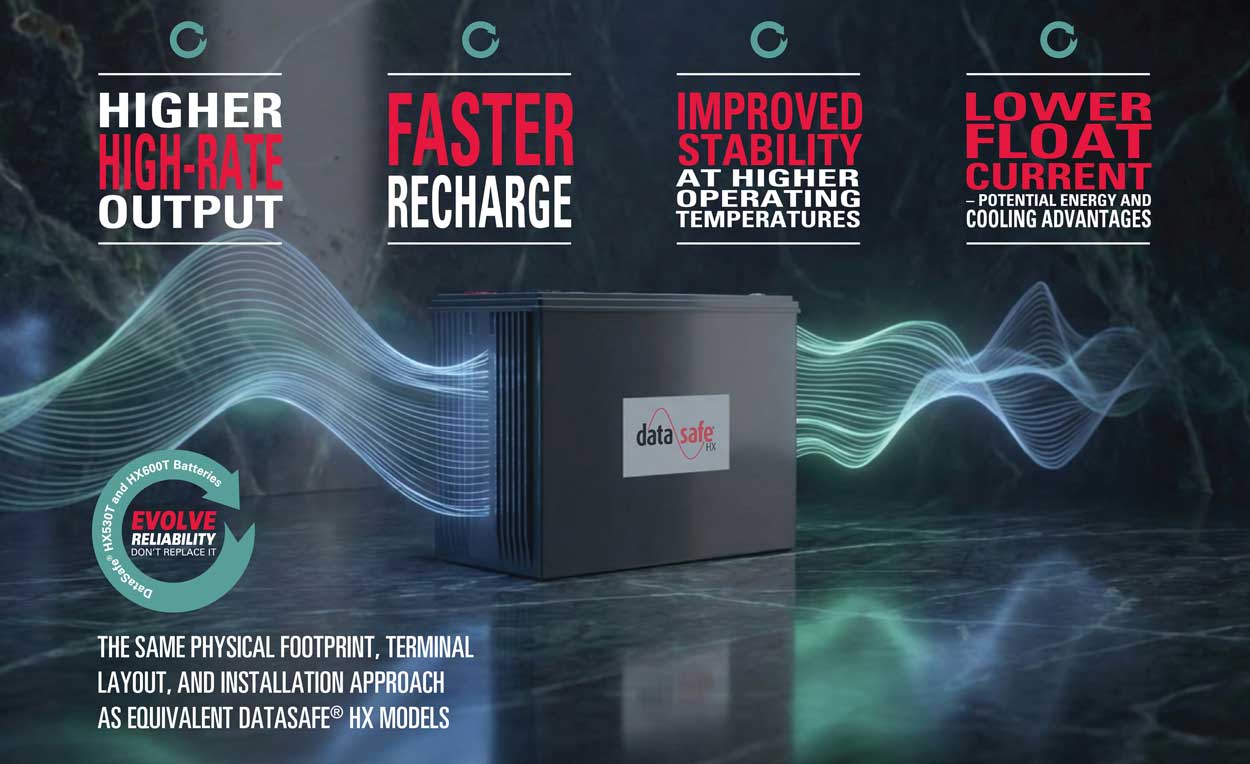
Evolve-your-reliability-datasafehx.jpg


DATASAFE® HX530T AND HX600T BATTERIES: BUILT FOR MODERN UPS DEMANDS

The DataSafe® HX530T and DataSafe® HX600T batteries expand the industry-recognized DataSafe® HX battery range by pairing true TPPL technology with the same footprint, terminal design, and installation approach already used across many U.S. deployments.

KEY ADVANTAGES FOR MODERN DATA CENTERS:

STRONGER HIGH-RATE PERFORMANCE
ENGINEERED FOR TODAY’S SHORTER AUTONOMY STRATEGIES AND RAPID LOAD TRANSITIONS.
FASTER RECHARGE AFTER DISCHARGE EVENTS
HELPS MAINTAIN READINESS ACROSS SUCCESSIVE DISTURBANCES.
LOWER FLOAT CURRENT
SUPPORTS BETTER THERMAL PERFORMANCE AND CAN HELP CONTROL COOLING COSTS.
STABILITY UNDER HIGHER TEMPERATURES
MATCHES THE OPERATIONAL REALITY OF MORE ENERGY-EFFICIENT COOLING STRATEGIES.
SIMPLE INTEGRATION
NO RACK CHANGES, CABLING ADJUSTMENTS, OR NEW COMMISSIONING PROCEDURES.

This “evolution-without-redesign” approach allows operators to modernize performance reliability where it matters, while maintaining the infrastructure and workflows they already trust, and without adding complexity to already compressed maintenance windows.

WHY THIS MATTERS FOR AI-DRIVEN GROWTH

The rise of AI is reshaping everything from rack density to cooling strategy inside data centers. According to independent research analyzed by Network World (based on Omdia data), AI-related network traffic is on track to nearly double in one year, from 39 exabytes in 2024 to 79 exabytes in 2025, and is projected to outgrow traditional traffic patterns by 2031, reflecting AI’s impact on traffic dynamics and demand.

Rapid ramping, peak loads, shorter autonomy periods, and more aggressive cooling strategies all place new expectations on UPS energy storage.

TPPL-based DataSafe® HX batteries provide the performance foundation needed to support:

  • Fast load swings
  • Higher peak demand
  • Short-duration high-rate discharge
  • More frequent recharge cycles

As AI adoption grows, the chemistry supporting UPS batteries becomes increasingly important in long-term power planning.

Data centers are under increasing pressure to support both reliability and lifecycle management.


The DataSafe® HX VRLA and TPPL batteries range support:

Energy efficiency

Lower float current in TPPL technology-based models can help reduce cooling and energy demand.

Lifecycle impact

All DataSafe® HX batteries are fully recyclable (>99% of materials), supporting circular manufacturing goals.

Long-term operational performance

Better temperature stability and recharge behavior help extend operational life in conditions where VRLA batteries’ service life may be influenced by hotter environments or increased cycling.


As operators rethink efficiency from server to chiller, power storage is becoming a more important lever in broader sustainability and energy strategies.

To determine whether TPPL-based DataSafe® HX batteries offer value for your site, consider:

  • Are your batteries running hotter than before?
  • Has runtime drift shown up during recent load tests?
  • Are recharge times slower following utility events?
  • Are float current and cooling costs increasing with age?
  • Are you raising temperature setpoints?
  • Are your loads more variable due to AI or virtualization?
  • Do you need stronger high-rate performance without changing your UPS platform?


While VRLA remains the right choice for many facilities, if the answer is “yes” to any of the above questions, TPPL-based DataSafe® HX batteries add performance margin for environments facing greater operational stress.


NEXT STEPS FOR DATA CENTER OPERATORS

If you're planning your next UPS battery refresh or want guidance on how TPPL and VRLA battery technology options can support your site’s differing performance and efficiency goals, EnerSys can help you evaluate the fit.

Talk with the EnerSys Data Center team

We can help assess runtime expectations, temperature conditions, cycling behavior, and upgrade paths tailored to your facility.


About EnerSys

Sustainability


Caution Concerning Forward-Looking Statements
EnerSys is making this statement in order to satisfy the “Safe Harbor” provision contained in the Private Securities Litigation Reform Act of 1995. Any of the statements contained in this article that are not statements of historical fact may include forward-looking statements that involve a number of risks and uncertainties. A forward-looking statement predicts, projects, or uses future events as expectations or possibilities. Forward-looking statements may be based on expectations concerning future events and are subject to risks and uncertainties relating to operations and the economic environment, all of which are difficult to predict and many of which are beyond our control. For a discussion of such risks and uncertainties that could cause actual results to differ materially from those matters expressed in or implied by forward-looking statements, please see our risk factors as disclosed in the “Risk Factors” section of our annual report on Form 10-K for the most recently ended fiscal year. The statements in this article are made as of the date of this article, even if subsequently made available by EnerSys on its website or otherwise. EnerSys does not undertake any obligation to update or revise these statements to reflect events or circumstances occurring after the date of the article.

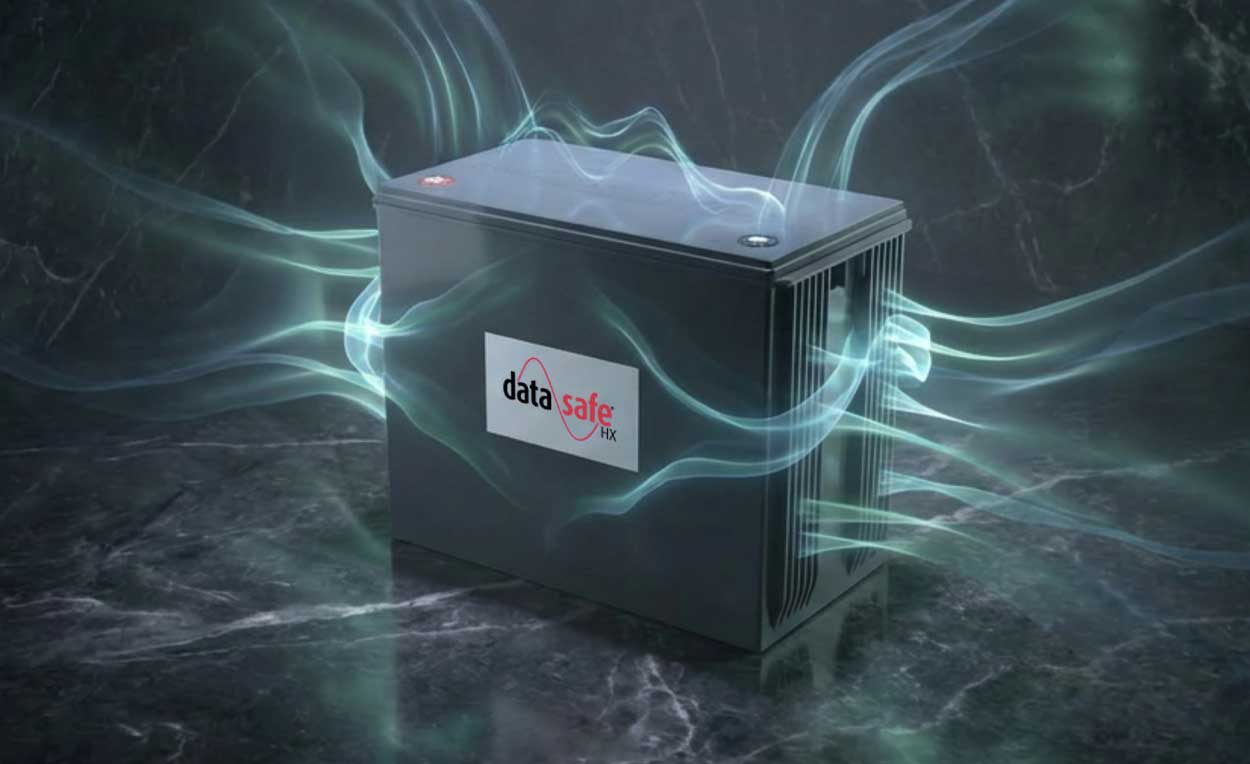
Evolve-your-reliability-datasafehx2.jpg


NO NEW PLATFORM. NO ADDED COMPLEXITY. JUST RELIABILITY THAT KEEPS EVOLVING.

For over a decade, the DataSafe® HX battery range has powered critical UPS applications worldwide. The DataSafe® HX530T and HX600T batteries extend that reputation with higher output, longer life, and greater efficiency through advanced TPPL chemistry.

For operators wanting to boost reliability without redesigning their UPS setup, this is one of the simplest paths forward.

Contact us today