polski
Centra danych

Your Runtime Target May Be Right. Your UPS Energy Storage Strategy May Not Be.

Your Runtime Target May Be Right. Your UPS Energy Storage Strategy May Not Be.

HOW AI TRAINING, INFERENCE, HPC, AND HIGH-DENSITY COMPUTE ARE RESHAPING DATA CENTER UPS BATTERY REQUIREMENTS

For years, many UPS energy storage conversations have started with runtime. How many minutes are required? Which chemistry meets the target? What footprint is available? What cost profile can be justified?

Those questions still matter. But in high-density data center environments, they may no longer be enough.

A UPS energy storage system can meet the runtime target on paper and still be misaligned with the workload it is expected to support. AI training, AI inference, HPC, cloud, storage, and enterprise applications do not all behave the same way. Some applications are steady. Some are latency sensitive. Some create short-duration, high-power demand. Some can drive faster, more synchronized changes in load. For UPS energy storage, those differences can change what the specification needs to prove.

WHAT IS CHANGING IN DATA CENTER UPS ENERGY STORAGE?

Data center UPS energy storage is shifting from a runtime-first conversation to a workload-first specification challenge. The right UPS battery strategy should consider runtime, power density, discharge profile, response speed, footprint, cycling expectations, and how the system behaves under sudden load changes.

The scale of change is already visible. The International Energy Agency reported that electricity demand from data centers increased by 17% in 2025, with AI-focused data centers growing even faster than the wider market.1

That growth is not only a capacity story. It is a planning challenge for power infrastructure.

AI IS NOT ONE WORKLOAD

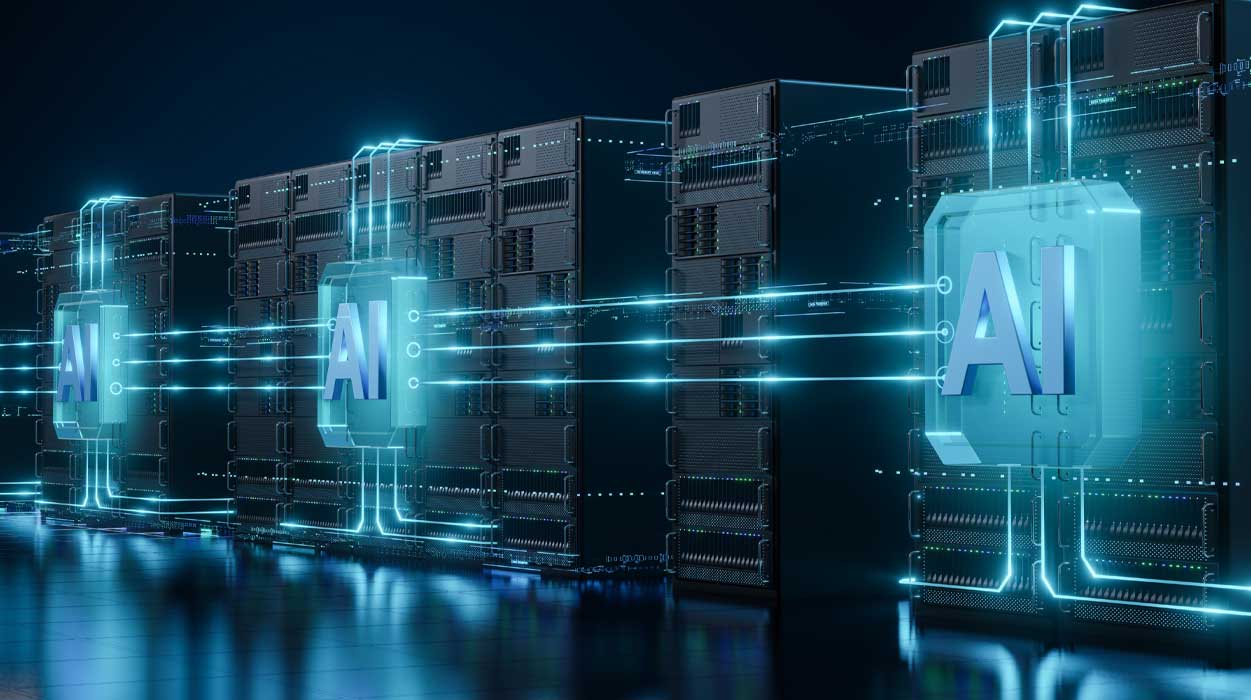
AI is often discussed as one category. For infrastructure planning, that is too blunt. AI training workloads are used to build, tune, and refine models. They are often associated with large GPU clusters, very high-power density, and rapid changes in demand as accelerated compute resources operate in parallel.

ai-workload.jpg

AI inference workloads are tied to live AI services, user requests, embedded enterprise applications, and production-scale deployment. They are often more latency-sensitive, which can shift infrastructure planning toward metro, near-metro, and network-rich locations. McKinsey expects inference to surpass training by 2030, representing more than half of AI compute and roughly 30 to 40 percent of total data center demand.2

The point is not that one workload is “hard” and another is “easy.” The point is that they are different. A facility designed around concentrated AI training may face a very different operating profile from one supporting production inference, HPC, enterprise applications, or a mixed environment.

REQUEST A WORKLOAD-BASED POWER REVIEW

SHARE YOUR RUNTIME TARGET, LOAD PROFILE, AND SITE CONSTRAINTS.
ENERSYS CAN HELP YOU REVIEW WHETHER YOUR UPS ENERGY STORAGE STRATEGY REFLECTS THE APPLICATION YOU ARE DESIGNING FOR.

BOOK your workload-based power review now

HOW WORKLOAD BEHAVIOR AFFECTS UPS ENERGY STORAGE

AI training is not only increasing power demand. It is changing the way power behaves. Schneider Electric notes that AI workloads, from large training clusters to edge inference servers, are shifting data center design toward higher rack power densities.3

For data center operators, the message is direct: annual energy use and aggregate capacity do not tell the whole story. How the load moves over time matters.

"Runtime alone does not tell an operator how the system will behave during sudden, high-power demand."


That does not mean every existing UPS architecture is suddenly inadequate. It does mean the old battery conversation is too narrow. Runtime alone does not tell an operator how the system will behave during sudden, high-power demand. Chemistry alone does not answer whether the energy storage strategy is aligned to the duty profile. Footprint alone does not reveal whether the specification is built around the workload or around legacy assumptions. In high-density environments, operators should be asking whether the current UPS energy storage strategy reflects the power required, the speed of demand change, the expected discharge profile, the likelihood of repeated high-rate events, the available footprint, and the need for predictable behavior under stress.

DataSafe-Noir-logo.jpg

WHERE THE DATASAFE NOIR ENERGY STORAGE SYSTEM FITS

That is the role the DataSafe Noir™ energy storage system is designed to play.

The DataSafe Noir™ energy storage system gives EnerSys customers a system-level lithium energy storage platform for UPS applications where high-power density, rapid response, and predictable behavior under dynamic load conditions are critical.

Explore the DataSafe Noir™
high-density lithium energy storage system


It should not be reduced to an “AI battery.” AI training is one clear use case because it can create short-duration, high-power, dynamic-load requirements. But the DataSafe Noir™ system is not limited to AI training.

The DataSafe Noir™ system is relevant wherever the workload, power profile, space constraint, and resilience objective point toward a higher-power, system-level lithium approach. That may include AI training, GPU clusters, HPC, accelerated compute, and other mission-critical environments where sudden demand changes place new stress on backup power infrastructure.

The question is not: “Is this an AI site?”
The better question is: “Does the UPS energy storage specification reflect how this workload actually behaves?”

WHERE LEAD-ACID AND TPPL BATTERIES STILL FIT

Established lead-acid battery solutions — including Thin Plate Pure Lead (TPPL) technology — remain highly relevant across the data center market. The emergence of high-density AI infrastructure does not erase the need for proven, reliable reserve-power solutions.

It makes correct application matching more important.

This is not a lithium-versus-lead-acid argument. It is a workload-fit argument. Established lead-acid and TPPL solutions may remain the right fit where the duty profile is primarily reserve power, where established UPS battery architectures continue to meet the resilience requirement, or where site conditions make proven lead-acid or TPPL solutions the most practical and reliable choice.

"This is not a lithium-versus-lead-acid argument.
It is a workload-fit argument."


That is the value of a broader EnerSys portfolio. The customer does not need a one-size-fits-all answer. The customer needs the right energy storage strategy for the workload, site conditions, duty cycle, risk profile, and commercial objective.

START EXPLORING

EnerSys supports a performance-first approach to data center UPS energy storage strategy.

Akumulatory

DataSafe Noir™ Energy Storage System

Zobacz szczegóły

Akumulatory DataSafe® HX

Zobacz szczegóły

Akumulatory DataSafe® HX+

Zobacz szczegóły

DataSafe® XE Batteries

Zobacz szczegóły

Akumulatory ODYSSEY® Performance

Zobacz szczegóły

A WORKLOAD-LED APPROACH TO DATA CENTER UPS ENERGY STORAGE

Data center power planning is becoming more complex. Capacity is rising, but the bigger issue is variation. Different workloads behave differently. Different sites face different constraints. Different resilience strategies call for different energy storage choices. Uptime Institute’s 2025 global survey points to a market under pressure from rising data center demand, power constraints, and AI-driven density requirements.4

That makes workload the right starting point for the UPS energy storage conversation. Runtime, chemistry, footprint, and cost still matter — but they should be assessed against the operating profile the infrastructure is being built to support.

With established TPPL technology and the DataSafe Noir™ energy storage system in its portfolio, EnerSys helps data center operators make that decision with more discipline. For some applications, proven lead-acid and TPPL solutions will remain the right answer. For high-density, dynamic-load environments, the DataSafe Noir™ system provides a system-level lithium platform designed around how power behaves under stress.

The next UPS specification should not begin and end with a runtime target.

It should start with the workload the infrastructure is being built to support.

REQUEST A WORKLOAD-BASED POWER REVIEW

SHARE YOUR RUNTIME TARGET, LOAD PROFILE, AND SITE CONSTRAINTS.
ENERSYS CAN HELP YOU REVIEW WHETHER YOUR UPS ENERGY STORAGE STRATEGY REFLECTS THE APPLICATION YOU ARE DESIGNING FOR.

BOOK your workload-based power review now


REFERENCES
1. International Energy Agency — Data centre electricity use surged in 2025.
Website: https://www.iea.org/news/data-centre-electricity-use-surged-in-2025-even-with-tightening-bottlenecks-driving-a-scramble-for-solutions
2. McKinsey — The future of AI workloads
Website: https://www.mckinsey.com/featured-insights/week-in-charts/the-future-of-ai-workloads
3. Schneider Electric — How 6 AI Attributes Change Data Center Design
Website: https://www.se.com/ww/en/download/document/SPD_WP110_EN/
4. Uptime Institute — Global Data Center Survey Results 2025
Website: https://uptimeinstitute.com/resources/research-and-reports/uptime-institute-global-data-center-survey-results-2025

About EnerSys

Sustainability


Caution Concerning Forward-Looking Statements
EnerSys is making this statement in order to satisfy the “Safe Harbor” provision contained in the Private Securities Litigation Reform Act of 1995. Any of the statements contained in this article that are not statements of historical fact may include forward-looking statements that involve a number of risks and uncertainties. A forward-looking statement predicts, projects, or uses future events as expectations or possibilities. Forward-looking statements may be based on expectations concerning future events and are subject to risks and uncertainties relating to operations and the economic environment, all of which are difficult to predict and many of which are beyond our control. For a discussion of such risks and uncertainties that could cause actual results to differ materially from those matters expressed in or implied by forward-looking statements, please see our risk factors as disclosed in the “Risk Factors” section of our annual report on Form 10-K for the most recently ended fiscal year. The statements in this article are made as of the date of this article, even if subsequently made available by EnerSys on its website or otherwise. EnerSys does not undertake any obligation to update or revise these statements to reflect events or circumstances occurring after the date of the article.

Datasafe-noir-2.jpg

MORE POWER FROM LESS SPACE

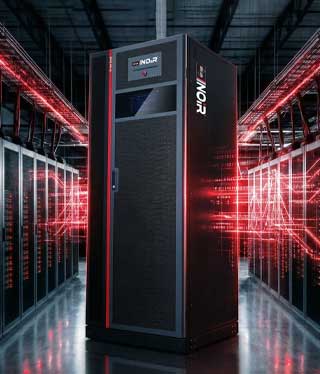
When power requirements rise, the energy storage system can quickly become a space and complexity issue. The datasafe noir™ energy storage system is designed to deliver high power and energy density in a compact lithium-based platform.

EXPLORE DATASAFE NOIR

DataSafeXE-TPPL-284x314.jpg

THINK ALL ‘PURE LEAD’ BATTERIES ARE THE SAME? THINK AGAIN

In a word: no. ‘Pure lead’ batteries vary in terms of performance, TCO, lifespan, and other factors. Your choice of batteries can have a detrimental effect on your data center’s operational efficiency and expenditure.
FIND OUT WHY YOUR DATA CENTER MIGHT BE LOSING OUT

Learn More